


“Those of us in positions of responsibility will need to be less concerned with the judgment of special interests and well-connected donors, and more concerned with the judgment of our children.”
Barack Obama, June 29 national radio address
I’ll admit it—I was moved several times as I watched and listened to President Barack Obama’s major speech on the climate crisis on June 25th. As much as I have been angered so many times over the last 4 ½ years since he came into office by the weakness of many of his actions and his pretty-close-to public silence on climate, it is no small thing that the U.S. President, an essential actor if we’re to have any chance of avoiding worldwide, catastrophic climate change, has clearly turned a corner and come out rhetorically strong.
To have Obama speaking for 50 minutes on the subject—to hear him put forward a solid analysis of why this is such a critical issue—to hear him go aggressively after the climate deniers (“we don’t have time for a meeting of the Flat Earth Society”)—and to hear him say, unexpectedly, about the Keystone XL pipeline that it should be built “only if this project does not significantly exacerbate the problem of carbon pollution,” which of course it does, big time—to hear all of this was a very big deal.
What about his specific plans? A number of them are important, without a doubt: directing EPA to come up with a regulatory regime to reduce CO2 from all, both new and existing, power plants; active government support for the spread of renewable energy; a strengthening of energy efficiency; support to communities in their efforts to adapt to a changing climate; advocating, again, a phasing out of fossil fuel subsidies; an end, or close to it, of government funding of overseas coal plants; and more.
But here’s the thing, the very big “but” about Obama’s speech: it was the speech of an incrementalist on climate. His plans are not even close to what is needed. A goal of a 17% reduction of greenhouse gas emissions compared to 2005 by 2020 is weak, very problematic. And the most problematic of all: in his speech Obama projected as the #1 thing we should be doing to reduce emissions the “strengthen[ing] of our position as the top natural gas producer” in the world. He did this even though in his plan of action he identifies the reduction of methane leakage into the atmosphere as one of his objectives. About 90% of natural gas is methane, and there’s a huge problem of leakage all throughout the lifecycle of gas, especially fracked gas. Talk about a contradiction!
We don’t need incremental action on climate. We need action that is appropriate to the deepening crisis. Even the head of the United Nations Climate Change Secretariat, Christiana Figueres, politely criticized Obama’s speech: “I think the fact remains that compared to what the science demands, no country is doing enough.”
For years a number of people who have closely studied this issue and who have had the courage to speak out and take action—Al Gore, James Hansen and Bill McKibben, most prominently—have said that what is needed is the kind of society-wide mobilization on this issue that we saw right after the attack on Pearl Harbor in 1941. We need a nonviolent, World War-type mobilization for a renewable energy revolution.
To move the United States and other laggard nations of the world toward this level of urgency, it is going to take a mass movement of many millions, and fortunately we’ve got one developing. You don’t bring 40,000-plus people to D.C. in the middle of the winter, as happened four months ago on Feb. 17, unless there’s something at work at the grassroots.
As distinct from Obama’s incrementalism, this movement is about resistance, resistance to the fossil fuel industry, oil, coal and gas, as well as, for a growing number of it members, resistance to false solutions like biomass, the industrial cutting down and burning of trees (see more on this issue at http://www.usnews.com/science/articles/2010/06/11/wood-power-worse-polluter-than-coal).
One month after Obama’s speech, during the statistically hottest time of the year, this fossil fuel resistance movement will take action in a coordinated way across the USA via 350.org’s Summer Heat campaign. Over the last 10 days of July, major, day-after-day actions all over the country will show the dedication and growing tactical sophistication and creativity of the fossil fuel resistance. Strategically, it’s happening at a key time given not just Obama’s speech but the continuation of an extreme-weather-events dynamic that has weakened the climate deniers and opened the minds of more and more US Americans to the climate issue.
One of the Summer Heat actions that I’m involved with is a nine-day walk from Camp David via Harpers Ferry to Washington, D.C. On that ninth day, Saturday, July 27th, there will be a rally at the White House in late morning to keep the pressure on Obama to reject the Keystone XL pipeline and step up his game on climate. Among those speaking at that rally will be Bill McKibben.
As we engage in these and future actions, it’s important that the fossil fuel resistance continue to engage with Obama and other incrementalist Democrats (and Republicans), pushing them to go past where they are right now.
It seems to me that there’s a potential analogy between Obama and the 3 ½ years he has left as President and Abraham Lincoln after the Civil War broke out. To Lincoln at the beginning of his term, the war was not about the abolition of slavery; it was about the preservation of the union. At that point in time he might have been willing to end the war if the Confederacy had agreed to stop fighting with a compromise of no spread of slavery beyond the South. But as the war developed, as Black people took direct action by leaving the plantations and migrating to Union-held territory, as the North had difficulty in subduing the South, Lincoln’s thinking evolved, leading to the Emancipation Proclamation and, in early 1865, his successful push for a Constitutional amendment outlawing slavery.
The world needs to see a similar evolution with Barack Obama when it comes to the climate crisis, and after his June 25th speech there’s reason to believe it could happen. Between the extreme weather events that will keep hitting us and the growth of the fossil fuel resistance movement, there’s little question that the pressures will intensify for action on climate at the scale of the crisis.
It’s impossible to know exactly how this might play itself out. But what we do know is what we need to do if it’s to have a chance of happening:
{C}· Realize that mass movements that succeed are made up of people who have a common goal but varying ideas on how to get there and who are at different places as far as what they are willing to do.
{C}· Keep building the fossil fuel resistance, from the grassroots up to the national and international levels.
{C}· Keep engaging as is possible with Obama and other incrementalists, pushing them to realize the necessity of stronger action than they think is politically possible right now.
Let’s bring the Summer Heat!
Ted Glick is the National Campaign Coordinator of the Chesapeake Climate Action Network. Past writings and other information can be found at http://tedglick.com, and he can be followed on Twitter at http://twitter.com/jtglick.

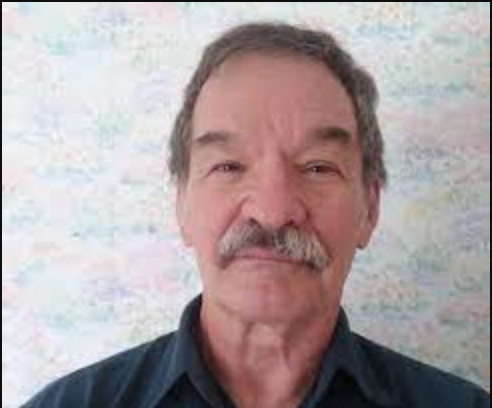
Ted Glick has devoted his life to the progressive social change movement. After a year of student activism as a sophomore at Grinnell College in Iowa, he left college in 1969 to work full time against the Vietnam War. As a Selective Service draft resister, he spent 11 months in prison. In 1973, he co-founded the National Committee to Impeach Nixon and worked as a national coordinator on grassroots street actions around the country, keeping the heat on Nixon until his August 1974 resignation. Since late 2003, Ted has played a national leadership role in the effort to stabilize our climate and for a renewable energy revolution. He was a co-founder in 2004 of the Climate Crisis Coalition and in 2005 coordinated the USA Join the World effort leading up to December actions during the United Nations Climate Change conference in Montreal. In May 2006, he began working with the Chesapeake Climate Action Network and was CCAN National Campaign Coordinator until his retirement in October 2015. He is a co-founder (2014) and one of the leaders of the group Beyond Extreme Energy. He is President of the group 350NJ/Rockland, on the steering committee of the DivestNJ Coalition and on the leadership group of the Climate Reality Check network.
ZNetwork is funded solely through the generosity of its readers.
Donate




