


The most powerful state in history has proclaimed that it intends to control the world by force, the dimension in which it reigns supreme.
President Bush and his cohorts evidently believe that the means of violence in their hands are so extraordinary that they can dismiss anyone who stands in their way.
The consequences could be catastrophic in Iraq and around the world. The United States may reap a whirlwind of terrorist retaliation — and step up the possibility of nuclear Armageddon.
Bush, Dick Cheney, Donald Rumsfeld and company are committed to an “imperial ambition,” as G. John Ikenberry wrote in the September/October issue of Foreign Affairs — “a unipolar world in which the United States has no peer competitor” and in which “no state or coalition could ever challenge it as global leader, protector and enforcer.”
That ambition surely includes much expanded control over Persian Gulf resources and military bases to impose a preferred form of order in the region.
Even before the administration began beating the war drums against Iraq, there were plenty of warnings that U.S. adventurism would lead to proliferation of weapons of mass destruction, as well as terror, for deterrence or revenge.
Right now, Washington is teaching the world a dangerous lesson: If you want to defend yourself from us, you had better mimic North Korea and pose a credible threat. Otherwise we will demolish you.
There is good reason to believe that the war with Iraq is intended, in part, to demonstrate what lies ahead when the empire decides to strike a blow — though “war” is hardly the proper term, given the gross mismatch of forces.
A flood of propaganda warns that if we do not stop Saddam Hussein today he will destroy us tomorrow.
Last October, when Congress granted the president the authority to go to war, it was “to defend the national security of the United States against the continuing threat posed by Iraq.”
But no country in Iraq’s neighborhood seems overly concerned about Saddam, much as they may hate the murderous tyrant.
Perhaps that is because the neighbors know that Iraq’s people are at the edge of survival. Iraq has become one of the weakest states in the region. As a report from the American Academy of Arts and Sciences points out, Iraq’s economy and military expenditures are a fraction of some of its neighbors’.
Indeed, in recent years, countries nearby have sought to reintegrate Iraq into the region, including Iran and Kuwait, both invaded by Iraq.
Saddam benefited from U.S. support through the war with Iran and beyond, up to the day of the invasion of Kuwait. Those responsible are largely back at the helm in Washington today.
President Ronald Reagan and the previous Bush administration provided aid to Saddam, along with the means to develop weapons of mass destruction, back when he was far more dangerous than he is now, and had already committed his worst crimes, like murdering thousands of Kurds with poison gas.
An end to Saddam’s rule would lift a horrible burden from the people of Iraq. There is good reason to believe that he would suffer the fate of Nicolae Ceausescu and other vicious tyrants if Iraqi society were not devastated by harsh sanctions that force the population to rely on Saddam for survival while strengthening him and his clique.
Saddam remains a terrible threat to those within his reach. Today, his reach does not extend beyond his own domains, though it is likely that U.S. aggression could inspire a new generation of terrorists bent on revenge, and might induce Iraq to carry out terrorist actions suspected to be already in place.
Right now Saddam has every reason to keep under tight control any chemical and biological weapons that Iraq may have. He wouldn’t provide such weapons to the Osama bin Ladens of the world, who represent a terrible threat to Saddam himself.
And administration hawks understand that, except as a last resort if attacked, Iraq is highly unlikely to use any weapons of mass destruction that it has — and risk instant incineration.
Under attack, however, Iraqi society would collapse, including the controls over the weapons of mass destruction. These could be “privatized,” as international security specialist Daniel Benjamin warns, and offered to the huge “market for unconventional weapons, where they will have no trouble finding buyers.” That really is “a nightmare scenario,” he says.
As for the fate of the people of Iraq in war, no one can predict with any confidence: not the CIA, not Rumsfeld, not those who claim to be experts on Iraq, no one.
But international relief agencies are preparing for the worst.
Studies by respected medical organizations estimate that the death toll could rise to the hundreds of thousands. Confidential U.N. documents warn that a war could trigger a “humanitarian emergency of exceptional scale” — including the possibility that 30 percent of Iraqi children could die from malnutrition.
Today the administration doesn’t seem to be heeding the international relief agency warnings about an attack’s horrendous aftermath.
The potential disasters are among the many reasons why decent human beings do not contemplate the threat or use of violence, whether in personal life or international affairs, unless reasons have been offered that have overwhelming force. And surely nothing remotely like that justification has come forward.
Noam Chomsky is a political activist, professor of linguistics at the Massachusetts Institute of Technology and author of the bestseller “9-11.” He wrote this article for the New York Times Syndicate

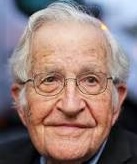
Noam Chomsky (born on December 7, 1928, in Philadelphia, Pennsylvania) is an American linguist, philosopher, cognitive scientist, historical essayist, social critic, and political activist. Sometimes called "the father of modern linguistics", Chomsky is also a major figure in analytic philosophy and one of the founders of the field of cognitive science. He is a Laureate Professor of Linguistics at the University of Arizona and an Institute Professor Emeritus at the Massachusetts Institute of Technology (MIT), and is the author of more than 150 books. He has written and lectured widely on linguistics, philosophy, intellectual history, contemporary issues, and particularly international affairs and U.S. foreign policy. Chomsky has been a writer for Z projects since their earliest inception, and is a tireless supporter of our operations.
ZNetwork is funded solely through the generosity of its readers.
Donate




