


A deal is done. Jubilation in European capitals comes out of self-interest. Sanctions against both Iran and Russia, and chaos in Libya have meant that Europe cannot access cheap energy.
There is little hope for stability in Libya in the short-term. There is even less hope for an entente between the West and Russia. Sweet Libyan oil and Russian natural gas will now be easily available to Europe for a long time to come. The Iran deal will end sanctions almost immediately – which would allow Iranian gas and oil to flow into Europe.
For Iran, of course, the deal is essential. It means that it will now be able to trade openly – selling its energy reserves and buying essential supplies, including pharmaceuticals.
The Swift banking network – shut down in Iran as a consequence of European sanctions – will now restart, so that money can now be wired into and out of Iran to settle accounts. A sign of relief goes through countries such as India, which rely upon Iranian energy and would like to expand sales of drugs and foodstuffs to Iran.
Convulsions greeted the deal in Israel.
Its security cabinet – already unhinged from reality – decided to fulminate against the deal. Israel does not like it that Iran is now a declared nuclear energy state, and that all its nuclear facilities will remain intact.
For the world, the Iran deal should be the first step toward a Middle East Nuclear Free Zone. Iran is a member of the Nuclear Non-Proliferation Treaty (NPT). Its status as a nuclear power state is guaranteed by the NPT.
It is on that basis that the International Atomic Energy Agency (IAEA) will monitor Iran’s nuclear industry. But meanwhile, Israel – angry at the deal – is not a member of the NPT, has no international monitors and yet has a growing nuclear arsenal.
It is important to indicate that, despite its policy of “studied ambiguity”, Israel is a known nuclear weapons state not just a nuclear energy state.
The United States has known of Israel’s nuclear weapons programme since July 1960. By December of that year, a US government Special National Intelligence Estimate – SNIE 100-8-60 – acknowledged that Israel “is engaged in construction of a nuclear reactor complex in the Negev near Beershebha”, and that “plutonium production for weapons is at least one major purpose of this effort”.
By 1969, the Nixon administration had sufficient evidence that Israel had reached the point “whereby all the components for a weapon are at hand, awaiting only final assembly and testing”.
In a memo dated 19 July 1969, Nixon’s Secretary of State Henry Kissinger wrote: “We judge that the introduction of nuclear weapons into the Near East would increase the dangers in an already dangerous situation and therefore not be in our interest.”
But Kissinger was wary of making Israel’s nuclear weapons programme an issue. “Our main object is to keep secret Israeli nuclear weapons,” he concluded. This has remained US policy ever since.
While Iran had to face terrible sanctions and will continue to have its nuclear energy industry monitored, Israel is allowed its moral outrage and its nuclear weapons. The double standard is glaring.
It was Norway that provided Israel with the heavy water in 1959, but it would be its neighbour, Finland, that tried to rein in Israeli nuclear weapons in 2012.
In September 2013, Iran’s President Hassan Rouhani told the UN General Assembly that Israel should join the NPT “without further delay”. This was met in Tel Aviv with stone silence.
The scofflaw of the region – Israel – refuses to accept international agreements or to help create a zone of peace in West Asia. But it is not alone.
The United States currently houses nuclear weapons in its bases along the Gulf, from Bahrain to Qatar and outward to Djibouti. A Middle East Nuclear Weapons Free Zone would mean an end to the US practice of housing tactical nuclear weapons in the waters around the region.
In May 2015, the US and the United Kingdom killed off the final document of a conference of NPT states because of the concept of the Middle East Nuclear Weapons Free Zone. Each Arab state and Iran agreed to the concept, despite the otherwise fractious divides in the region.
Only Israel and the West raised objections to it. It tells one a great deal about who maintains and monitors the roadblocks to peace in West Asia.
Vijay Prashad is a columnist at Frontline and a senior research fellow at AUB’s Issam Fares Institute of Public Policy and International Affairs. His latest book is The Poorer Nations: A Possible History of the Global South (Verso, 2014 paperback).

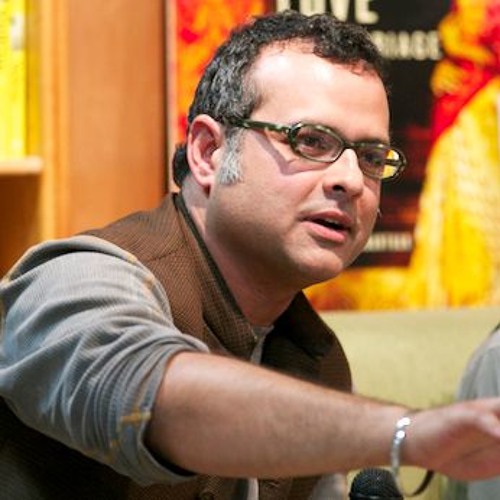
Vijay Prashad is an Indian historian, editor, and journalist. He is a writing fellow and chief correspondent at Globetrotter. He is an editor of LeftWord Books and the director of Tricontinental: Institute for Social Research. He is a senior non-resident fellow at Chongyang Institute for Financial Studies, Renmin University of China. He has written more than 20 books, including The Darker Nations and The Poorer Nations. His latest books are Struggle Makes Us Human: Learning from Movements for Socialism and (with Noam Chomsky) The Withdrawal: Iraq, Libya, Afghanistan, and the Fragility of U.S. Power. Tings Chak is the art director and a researcher at Tricontinental: Institute for Social Research and lead author of the study “Serve the People: The Eradication of Extreme Poverty in China.” She is also a member of Dongsheng, an international collective of researchers interested in Chinese politics and society.
ZNetwork is funded solely through the generosity of its readers.
Donate




