


We are a contrary, and often paradoxical, bunch on the left. On the one hand, most of us began our involvement in politics as rebels against authority. We often find it difficult to accept discipline – even self-discipline. Look at the left’s tendency to split and divide.
On the other hand, the left also has a propensity to look to strong leaders. We have a tendency to project our vision onto a single individual who can articulate it well – or who appears to have a clear and unequivocal sense of where we should be going and what needs to be done to get there. This can mean absolving ourselves of individual responsibility; the other side of the coin to the left’s lack of discipline.
But we should also keep in mind the many, often less acknowledged, examples of left organisations that have functioned very effectively without a single leader. There is a plethora of examples from the women’s, peace and green movements, as well as the international organising of the alter-globalisation movement.
And some of the best examples of this form of organisation historically can be found in the trade union and labour movement at its best.
Take, for example, the structures of trade union branches and shop stewards’ organisations. These are a product of a long tradition of members debating, agreeing and renewing clear, transparent written rules that create a framework of mutual accountability, self-discipline and individual responsibility. They are there on paper, the responsibility of every member, to be used, contested and, once agreed, followed.
Of course inertia can set in; the rules become a barrier to creative thinking and change; officials become corrupt or complacent, or retreat into dry, formulaic and ineffective patterns of activity. Or defeat can produce the same consequences through withdrawal from active membership. Yet the rules and basic principles remain, available for a new generation operating in more buoyant circumstances to use, adapt and change – as happened in Britain in the 1970s, and now again in the 21st century.
Structure doesn’t necessarily mean a single leader. This is an important distinction because a lack of structure can be every bit as undemocratic as old-style hierarchies. We need always to be aware of the ‘tyranny of structurelessness’, a concept that gets its name from a pamphlet produced out of the experiences of the 1970s’ women’s liberation movement, which reflected on the experiments of that movement in organising in ways that did not only resist the idea of leaders, but also at times discarded any structures or divisions of labour at all. In reality, this apparent lack of structure too often disguised an informal, unacknowledged and unaccountable leadership that was all the more pernicious because its very existence was denied.
The only democratic answer lies in the creation of transparent structures based on collectively agreed rules that may or may not include leaders of some kind.
So why might we need leaders at all? Three key reasons come to mind.
First, there is the need in complex organisations for mechanisms of coordination and unification. Leaders are often those who try to have an overview of the activities of an organisation, and with this a responsibility for the overall needs of that organisation.
Today, new technological tools enable us to exchange and share information and understanding much more quickly and efficiently. Increasingly, networks are proving themselves to be more effective than rigid hierarchies. There still need to be individual as well as collective positions of responsibility, where the buck stops. But there is much more scope for avoiding the concentration of information and power and for rotating and splitting positions of ultimate responsibility.
Second, there is an unevenness in the willingness to make things happen, to take the initiative and – crucially – accept responsibility. This is often when leaders emerge. For organisations to develop and innovate, we need people who provide an extra drive, an extra creativity, who are prepared to commit extra time.
But this needn’t lead to permanent positions of leadership; rather, it can be regarded as more like surges of energy. The danger with any single leader, however able or effective or accountable on paper, is that the individual substitutes for and holds back the capacities of the ‘led’, either through their own desires or the inertia of others.
The third need for leaders – and perhaps the toughest one to crack in the context of left organisations – is in relation to political institutions. There is a common factor underlying the very different crises associated with Blair, Lula and Sheridan. It is (obviously to differing degrees and around very different politics) the elevation beyond the democratic control of an organisation of someone who appears to symbolise that organisation’s cause.
In all such cases, the process by which so much is projected onto a single leader has produced a psychological effect in the individual concerned. In the case of Tony Blair, a party that had lost its selfconfidence in being able ever again to win an election handed itself over to someone who seemed to know how to do it. As Blair and New Labour set about destroying the left (the obstacle, as they saw it, to electoral success), they effectively destroyed all sources of contrary views, checks and balances. The result was not just presidentialism but a president who has increasingly come to occupy a fantasy world about his own powers as an agent of history.
The equivalent tragedy for the Brazilian Workers Party (PT) was the way that a powerful section of its leadership encouraged the members and the voters to project onto Lula all their dreams of popular power (see Sue Branford). The radical, democratic and egalitarian vision worked on by PT members across the country became reduced to the symbolism of a former factory worker in the presidential palace. Lula lives the fantasy that if he is in office, the people are in power. He must get there and stay there by every means possible, no matter how corrupt and how slavish in their deference to the Brazilian state and the international financial markets.
Similarly, with Tommy Sheridan (and regardless of one’s views of the circumstances surrounding the current split), the Scottish Socialist Party invested too much in this one individual as the embodiment of that party. Sheridan, no doubt, believes that he represents socialism in Scotland, that his reputation is crucial to its advance, and that preserving that reputation by whatever means necessary is essential to the cause. Again, the ends are held to justify the means. But again, the symbol has almost ended up consuming the reality.
Is this sort of thing inevitable once the left steps into the den of electoral politics? What are the features of our ‘representative’ political institutions that lead to this kind of decapitation of radical or potentially radical movements and parties?
There has always been a double meaning to the idea of representation. On the one hand, there is representation as meaning ‘to symbolise’ or ‘to stand for’ the people. And on the other hand, there is representation as ‘making present’ those who cannot be present in person. An aspect of the deepening crisis of our institutions of political representation is that as the power of national elected institutions increasingly gives way to unelected international economic bodies and military alliances, the symbolism of popular leaders fills the democratic vacuum.
One antidote must involve turning ‘representation’ into a process of making the people present. This includes using election campaigns to involve people actively in politics, to raise expectations and to stimulate people to discover their own sources of power to realise these expectations.
It’s also a matter of radical democratic reforms to make the presence of the people – as a plurality, not a mass – as direct as possible. And if people are to be engaged in the political process in this way, they must be given the power to make meaningful decisions as a consequence of that engagement – even if those decisions may not be the ones that we on the left would like.
In immediate and practical terms, this requires a commitment to real local democracy – a full-blooded ‘new localism’, not the safe and sanitised version that appeals to the current political class in Britain. This would involve a wideranging programme, starting from a proportional electoral system (one that does not simply hand over power to the parties), powerful legislation for maximum openness, and a real devolution of power to localities within a framework of national standards and rights.
To be genuine, such a devolution would entail a willingness to accept ‘bad’ or unpalatable decisions, to allow people to make mistakes – and to take responsibility for them. On the left, we would have to be prepared to confront trends that we oppose – including the policies and values represented by the BNP, and other forms of chauvinism, racism and fundamentalism – politically rather than by centralised, institutional fiat.
It also requires counterposing to privatisation proposals for deeper, everyday forms of democratic control over public institutions. As Oscar Reyes writes in this issue, one of the new-look Cameron Conservatives’ ‘big ideas’ is the promotion of the concept of ‘devolution-by-marketisation’ in parallel to New Labour’s notion of the ‘entrepreneurial state’, the state as a contractor of services. The left needs to develop its own alternative – and effective – models of democratic social organisation and control.
Another antidote to the crisis of leadership is the diffusion of power within the left. Many of us have long argued that the power to achieve radical, emancipatory social change has many different sources: from the kitchen to the workplace, new media and old, the streets and the supermarket, as well as political parties per se. A recognition of the profound implications of this multiplicity of sources of social transformation is the basis of our commitment to a radical diffusion of power and agency on the left – and of the need for a radical rethinking of the role of parties and their leaders.
Some public figures act more as catalysts than ‘leaders’; and instead of personifying a cause they encourage those already engaged in resistance in their own immediate circumstances to realise the full scope of their potential power and their connection to a wider process of change.
The later Tony Benn, especially since he withdrew from parliament ‘to engage in politics’, might be a good example. The earlier Tony Benn, and the way in which most of the Labour left invested so much in his campaign for the party’s deputy leadership in the early 1980s, might not.
A much reduced Labour left is today coming together in another leadership election campaign. There are signs of lessons learnt – and not just as a result of the obvious realism that this is an election that cannot be won.
It is clear from his interview in this issue of Red Pepper that John McDonnell sees himself as a catalyst for rethinking and rebuilding rather than as a single leadership figure. Whether Blair’s destructive path will leave anything of the Labour Party with which to rebuild is an open question, but in the unions at least McDonnell’s campaign has an impressive base of support.
An independent Electoral Reform Society poll showed that 59 per cent of TUC delegates supported McDonnell. The structures and rules of the trade unions have meant that at least their part of the labour movement has survived the scourge of a leader out of control. Is it too much to hope that they glimpse an opportunity for a political organisation of the left that is not wholly obsessed with the question of its leader.

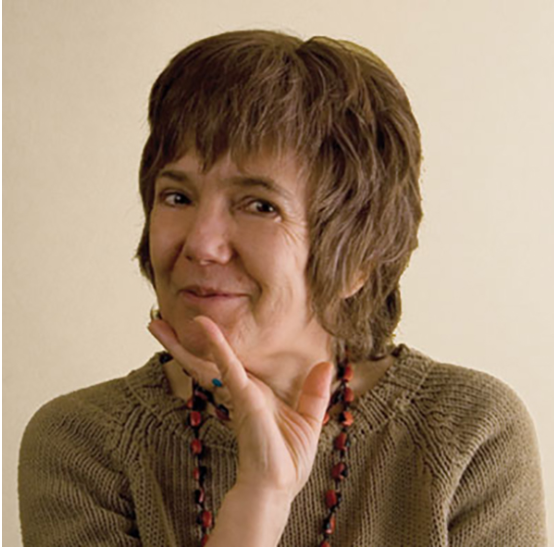
Hilary Wainwright is Research Director of the New Politics Programme at the Transnational Institute and editor of Red Pepper, a popular British new left magazine. She is also an Honorary Fellow in Sociology at Manchester University, UK. Her books include Reclaim the State: Adventures in Popular Democracy (Verso/TNI, 2003) and Arguments for a New Left: Answering the Free Market Right (Blackwell, 1993). She has written for ZNet, The Guardian, The Nation, New Statesman, Open Democracy, Carta, Il Manifesto and El Viejo Topo, as well as appearing as a commentator on BBC1, BBC Radio 4 and the BBC World Service. She has been a Senior Research Fellow at the International Labour Studies Centre, University of Manchester; a Research Fellow at the Centre for the Study of Global Governance at the London School of Economics, at Durham University and at the Open University, UK; Visiting Professor at the University of California, Los Angeles; and a Visiting Scholar at the Havens Center, University of Wisconsin, Madison and at Todai University, Tokyo. Wainwright also founded the Popular Planning Unit of the Greater London Council during the Thatcher years, and was convenor of the new economics working group of the Helsinki Citizens' Assembly from 1989 to 1994.
ZNetwork is funded solely through the generosity of its readers.
Donate




