


In its 2016 World report, Human Rights Watch shows how deeply it shares the U.S. government’s concern about its declining influence in Latin America.
Executive director Ken Roth does not see the U.S. and its EU allies as the most abusive and dangerous states in the world – something the ongoing destruction of Iraq, Libya, and Afghanistan should make clear to anyone. In Latin America, hundreds of thousands of lives have been lost due to U.S. backed coups and “counterinsurgency” in the past half century – all motivated by the U.S. government’s efforts to maintain a dominant role in the region. Last year, brushing aside millions of victims, Roth proclaimed the United States to be “the most powerful proponent of human rights.” He conceded that the United States has “faults,” and added that the world is “rightly suspicious of the U.S. government’s agenda, so Human Rights Watch is careful to maintain our independence from U.S. foreign policy.” In fact, it exerts negligible effort to be independent as showed by its response to a petition signed by over 100 scholars and activists (including a few Nobel Laureates).
In an essay that introduces the World Report, Roth harshly criticizes the U.S. government and other powerful states, stating “a polarizing us-versus-them rhetoric has moved from the political fringe to the mainstream. Blatant Islamophobia and shameless demonizing of refugees have become the currency of an increasingly assertive politics of intolerance.”
This is true and it’s to his credit that he wrote it. Human Rights Watch – like much of U.S. corporate media – is a liberal institution. Like the liberal end of the corporate media, it can point to criticism that is aimed at it from the left and right to falsely claim that it is free of political bias. But the liberal faction of the U.S. establishment has at least as much blood on its hands as the right. The CIA, for example, is despised in Latin America for excellent reasons, and it also has long recruited U.S. liberals very effectively. The renowned feminist Gloria Steinem was a CIA agent. She was impressed and relieved to find so many “enlightened” Kennedy era liberals in the CIA (watch the video clip provided here). A former CIA analyst named Miguel Díaz sat on a Human Right Watch advisory committee from 2003 to 2011 and then returned to work for the U.S. government as an “interlocutor between the intelligence community and non-government experts.” Other examples of a “revolving door” between Human Rights Watch and the Western establishment were provided in that petition I mentioned.
The shared assumptions between HRW and the liberal faction of the U.S. establishment are more important than the shared personnel. Roth deplores some of the abuses of world’s most powerful states in his World Report essay, but still describes them as the “strongest traditional allies of the human rights cause.” He fears that “as Western powers violate rights in addressing refugees or terrorism, their ability to uphold the broader set of rights is compromised.” It is up to western powers, in Roth’s view, to straighten out the rest of the world, but if those powers become too conspicuously bigoted and ruthless at home, he worries their influence may be easier to resist abroad. Roth devotes pages to his concern that nongovernmental organizations are being deprived of their “right to seek funding abroad when domestic sources are unavailable.” He sees western funded NGOs as essential to strengthening democracy in poor countries.
Roth defines “autocrats” in his piece as not simply dictators who have “dispensed with any pretense of democratic rule,” but also governments that maintain a “facade of democracy” and restrict or regulate foreign funding of NGOs. Roth calls out three Latin American governments in his essay with the clear intention of smearing them with the “autocrat” label: Ecuador, Venezuela, Bolivia – all left wing governments who have to contend with the threat of coups backed by Washington. Ecuador defeated a coup attempt in 2010, Bolivia in 2008, Venezuela in 2002. The last one was briefly successful and the U.S. State Department’s Office of Inspector General stated that the Bush administration had “provided training, institution building, and other support to individuals and organizations understood to be actively involved.”
It’s obvious, just relying on Human Rights Watch’s World Report alone, that Colombia, Mexico and Honduras – all close U.S. allies whom Roth did not mention in his essay – have vastly worse human rights records than the three Latin American countries he singled out. Colombia is truly in a class by itself, surpassed only by its patron, the United States. The World Report summary for Colombia says that “as of May 2015, the Attorney General’s Office was investigating more than 3,700 unlawful killings allegedly committed by state agents between 2002 and 2008.” Colombia also has “the world’s second largest population of internally displaced persons (IDPs) after Syria” – 6.8 million people. Colombia’s civil war was winding down before Bill Clinton’s “Plan Colombia” pushed it into its worst period, as Dan Kovalik recently pointed out.
The organization’s attacks on Venezuela and Ecuador have often focused on alleged limitations on “freedom of expression.” The World Report largely sticks to that line of attack on Ecuador and goes on at length depicting government critics as leaving in fear, facing unreasonable media regulations, and having minimal access to an audience. In reality, Ecuador’s media, which I have mentioned before (here and here), gives ample voice to very aggressive government critics. The World Report summary for Venezuela is even more dishonest. It states, “While criticism of the government is articulated in some newspapers and on some websites and radio stations, fear of government reprisals has made self-censorship a serious problem” – as if there were no TV broadcasters which are able to air criticism of government. During the height of violent anti-government protests in February of 2014, government critics appeared on the largest private networks (Venevision and Televen) to accuse the government of murder, repression and theft. Given Roth’s claim that foreign funds for NGOs are crucial to democracy in developing countries because government critics would otherwise be voiceless, Human Rights Watch’s lies and distortions about the media in these countries become easy to understand.
If foreign funded NGOs offered a path toward a vibrant democracy, then Haiti would be a democratic utopia by now. Instead, Haiti is the ultimate cautionary tale, a lesson in how foreign funded NGOs can help crush sovereignty and democracy. The World Report’s section on Haiti evades mentioning the U.S. perpetrated coup in 2004 that set the stage for Haiti’s current political crisis. That coup was consolidated by U.N. troops (MINUSTAH) whom have been in Haiti ever since and whom Human Rights Watch cynically credits with efforts to “strengthen the country’s democratic institutions.” The World Report does not denounce the U.N. for dismissing its responsivity for a cholera epidemic that killed 10,000 people, nor does it mention, much less deplore, that the Obama administration urged U.S. courts to dismiss a case against MINUSTAH brought by numerous victims.
As usual, while finding much to say about “freedom of expression” and “self-censorship” elsewhere, Human Rights Watch’s World Report is completely silent about the corporate media’s role in stifling public debate in the United States. However, if you really see western states as the “strongest traditional allies of the human rights cause,” then you are probably as much a victim of the West’s propaganda system as a contributor to it.

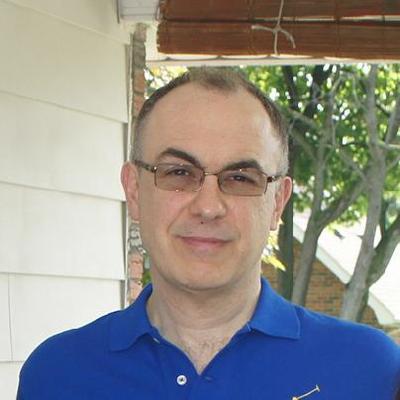
Joe Emersberger is co-author of “Extraordinary Threat: The US Empire, the Media, and Twenty Years of Coup Attempts in Venezuela.”
ZNetwork is funded solely through the generosity of its readers.
Donate





1 Comment
Where America travels, chaos is left behind.
It is abundantly clear that the world’s greatest threat to world peace and the most supportive of terrorism is lauded by a mass media and population wearing rose tinted glasses while being kept in the dark.