


This is the question people left of center have been asking for some time now. In different ways, it is being posed in Latin America, in much of Europe, in Arab and Islamic countries, in southern Africa, and in northeast Asia. The question is all the more dramatic because, in so many of these countries, this follows a period when there were significant shifts leftward.
The problem for the left is priorities. We live in a world in which the geopolitical power of the United States is in constant decline. And we live in a world in which the world-economy is seriously reducing state and personal incomes, so that the living standard of most of the world’s population is falling. These are the constraints of any political activity by the left, constraints the left can do little to affect.
Increasingly, there are movements emerging that make their appeal on a denunciation of mainstream centrist political parties. These movements call for radically new transformative policies. But there are two kinds of such movements, what one might call a right version and a left version. The right version can be found in Trump’s U.S. presidential campaign, Rodrigo Duterte’s anti-drug campaign in the Philippines, the Law and Justice Party in Poland, and many others. For the left, priority number one is to keep such movements from seizing state power. These movements are basically xenophobic and exclusionist and will use their control of the state to crush movements of the left.
On the other hand, there exist movements of the left that have also been organizing on the basis of radically new transformative policies. They include Bernie Sanders’ attempt to obtain the Democratic nomination for U.S. president, Jeremy Corbyn’s attempt to return the British Labor Party to its historic support of socialism, Syriza in Greece and Podemosin Spain, and many others. Of course, when such movements come near to obtaining state power, the world right (mainstream or radically anti-Establishment) unites to eliminate them or to force them to modify their positions in major ways. This is what happened to Syriza.
So this second priority has its in-built limitations. They are forced to become another version of a center-left social-democratic party. This does serve one function: It limits the short-run damage to the poorer strata, thereby minimizing the damage. But it does not aid in transformation.
The middle-run objective of establishing a new world-system that is relatively democratic and relatively egalitarian requires political action of a different kind. It requires organizing everywhere at the bottom level of politics and building alliances up from there, rather than down from state power. This has been the secret of the recent strength of rightwing anti-Establishment movements.
What will make it possible for the left to gain the upper hand in the struggle over the next 20-40 years to establish a successor system to our existing capitalist system, now in definitive decline, is an ability to combine the short-run politics of alliances to minimize the harm that tight budgets do to the poorer strata, fierce opposition to the control of state power by rightwing anti-Establishment movements, and continuous organization by the world left at the bottom level of politics. This is very difficult and requires constant clarity of analysis, firm moral options for the kind of possible other world we want, and wise tactical political decisions.

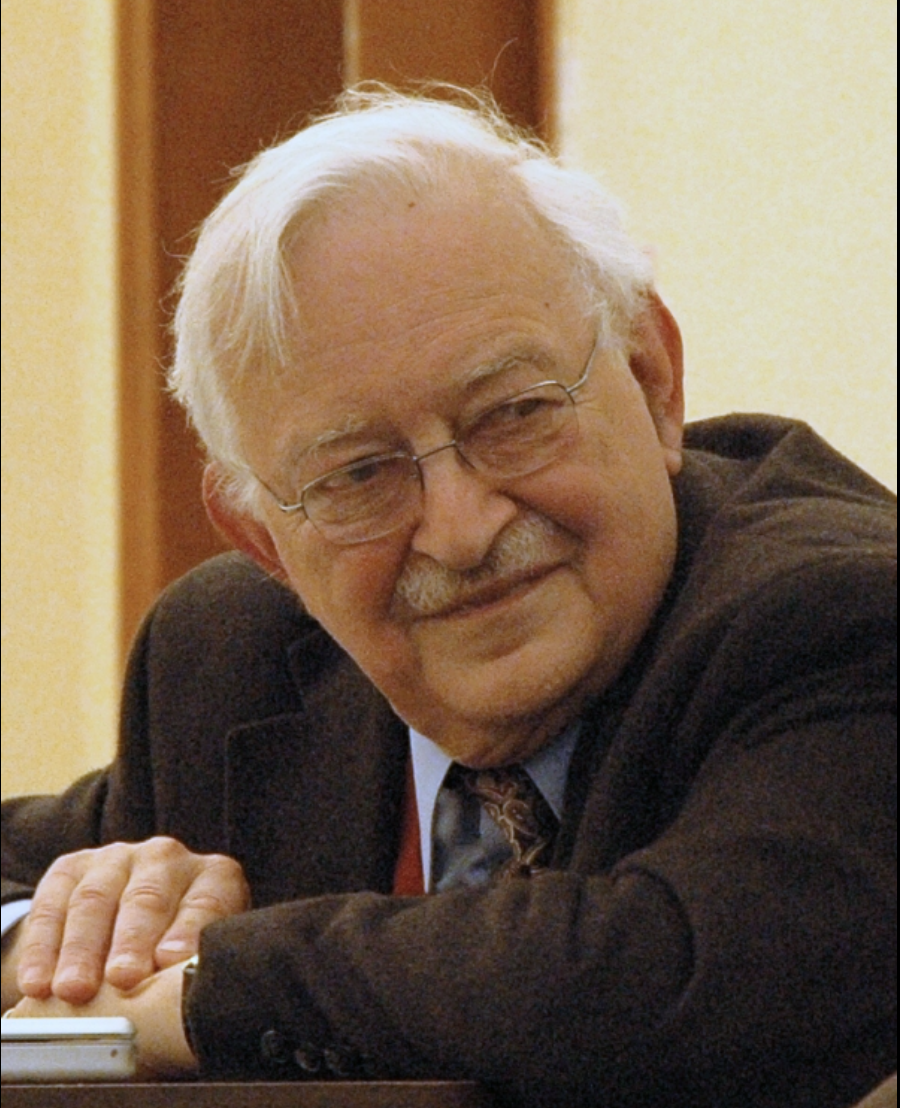
Immanuel Wallerstein (September 28, 1930 – August 31, 2019) was an American sociologist and economic historian. He is perhaps best known for his development of the general approach in sociology which led to the emergence of his world-systems approach. He was a Senior Research Scholar at Yale University from 2000 until his death in 2019, and published bimonthly syndicated commentaries through Agence Global on world affairs from October 1998 to July 2019. He was the 13th president of International Sociological Association (1994–1998). Politically, he considered himself on the "independent left" and was active in a variety of organizations. He argued that we are in the transition from our existing capitalist world-economy to some new system, and that the great political struggle of our time is about which new kind of systemic order will replace our existing one. A new systemic order could be better or worse, depending on our collective ability to push the worldwide decision in one direction or another. He believed that a crucial element in this is a vast debate about the kind of better system we wish to build, and saw the Reimagining Society Project as one of the ways to further this collective debate.
ZNetwork is funded solely through the generosity of its readers.
Donate




