


No doubt, George W. Bush thinks he is in the forefront of those sustaining the world capitalist system. No doubt, a large part of the world left thinks that too. But do the great capitalists think so? That is far less clear. A major warning signal has been launched by Morgan Stanley, one of the world’s leading financial investor firms, in their Global Economic Forum. Stephen Roach writes there that a “US-centric world” is unsustainable for the world-economy and bad in particular for the United States. He specifically takes on Robert Kagan, a leading neo-con intellectual, who has been arguing that American hegemony can only increase, particularly vis-a-vis Europe. Roach could not agree less. He sees the present world situation as one of “profound asymmetries” in the world-system, one that cannot last.
What is Roach’s argument? The world has been in a “great disinflation [marvelous euphemism] from 1982 to 2002” – a salutary appraisal so different from the usual crowing about the strength of the U.S. economic position in the world-economy. “And now the unwinding of a new disequilibrium is at hand – the rebalancing of a U.S.-centric world.” Why? First of all because of the “ever-widening disparities in the world’s external accounts.” He says that “as the United States squanders its already depleted national saving” and “as the rest of the world remains on a subpar consumption path,” the situation can only get worse.
Finally, the conclusion: “Can a saving-short US economy continue to finance an ever-widening expansion of its military superiority? My answer is a resounding ‘no.'” What will therefore happen? The “prices of dollar-denominated assets compared to those of non-dollar-denominated assets” must fall, and fall drastically soon. Roach estimates: “a 20% drop in real exchange rates and nearly double that in nominal terms, higher real interest rates, reduced growth in domestic demand, and faster growth overseas.” He ends his piece by saying that “the world is not functioning as a global economy” (so much for the globalization theorists) and that “for a lopsided global economy, a weaker dollar may well be the only way out.”
In short, Roach is arguing that the macho militarism swagger of the Bush regime, the dream of the U.S. hawks to remake the world in their image, is not merely undoable, but distinctly negative from the point of view of large U.S. investors, the audience for whom Roach writes, the customers of Morgan Stanley. Roach is of course absolutely right, and it is noteworthy that this is not being said by some left-wing academic, but by an insider of big capital.
Seen in longer historical perspective, what we are seeing here is the 500-year-old tension in the modern world-system between those who wish to protect the interests of the capitalist strata by ensuring a well-functioning world-economy, with a hegemonic but non-imperial power to guarantee its political underpinnings, and those who wish to transform the world-system into a world-empire. We had three major attempts in the history of the modern world-system to do this: Charles V/Ferdinand II in the sixteenth century, Napoleon in the beginning of the nineteenth century, and Hitler in the middle of the twentieth century. All were magnificently successful – until they fell flat on their faces, when faced by opposition organized by the powers that ultimately became hegemonic – the United Provinces, the United Kingdom, and the United States.
Hegemony is not about macho militarism. Hegemony is about economic efficiency, making possible the creation of a world order on terms that will guarantee a smoothly-running world-system in which the hegemonic power becomes the locus of a disproportionate share of capital accumulation. The United States was in that situation from 1945 to circa 1970. But it’s been losing that advantage ever since. And when the U.S. hawks and the Bush regime decided to try to reverse decline by going the world-imperial path, they shot the United States, and U.S.-based large capitalists, in the foot – if not immediately, in a very short future. This is what Roach is warning about, and complaining about.
But doesn’t the Bush regime give these capitalists everything they want – for example, enormous tax rebates? But do they really want them? Not Warren Buffett, not George Soros, not Bill Gates (speaking through his father). They want a stable capitalist system, and Bush is not giving them that. Sooner or later, they will translate their discontent into action. They may already be doing this. This doesn’t mean they will succeed. Bush may get reelected in 2004. He may push his political and economic madness further. He may seek to make his changes irreversible.
But in a capitalist system, there is also the market. The market is not all-powerful, but it is not helpless either. When the dollar collapses, and it will collapse, everything will change geopolitically. For a collapsed dollar is far more significant than an Al-Qaeda attack on the Twin Towers. The U.S. has clearly survived the latter. But it will be a vastly different U.S. once the dollar collapses. The U.S. will no longer be able to live far beyond its means, to consume at the rest of the world’s expense. Americans may begin to feel what countries in the Third World feel when faced by IMF-imposed structural readjustment – a sharp downward thrust of their standard of living.
The near bankruptcy of the state governments across the United States even today is a foreshadowing of what is to come. And history will note that, faced with a bad underlying economic situation in the United States, the Bush regime did everything possible to make it far worse.

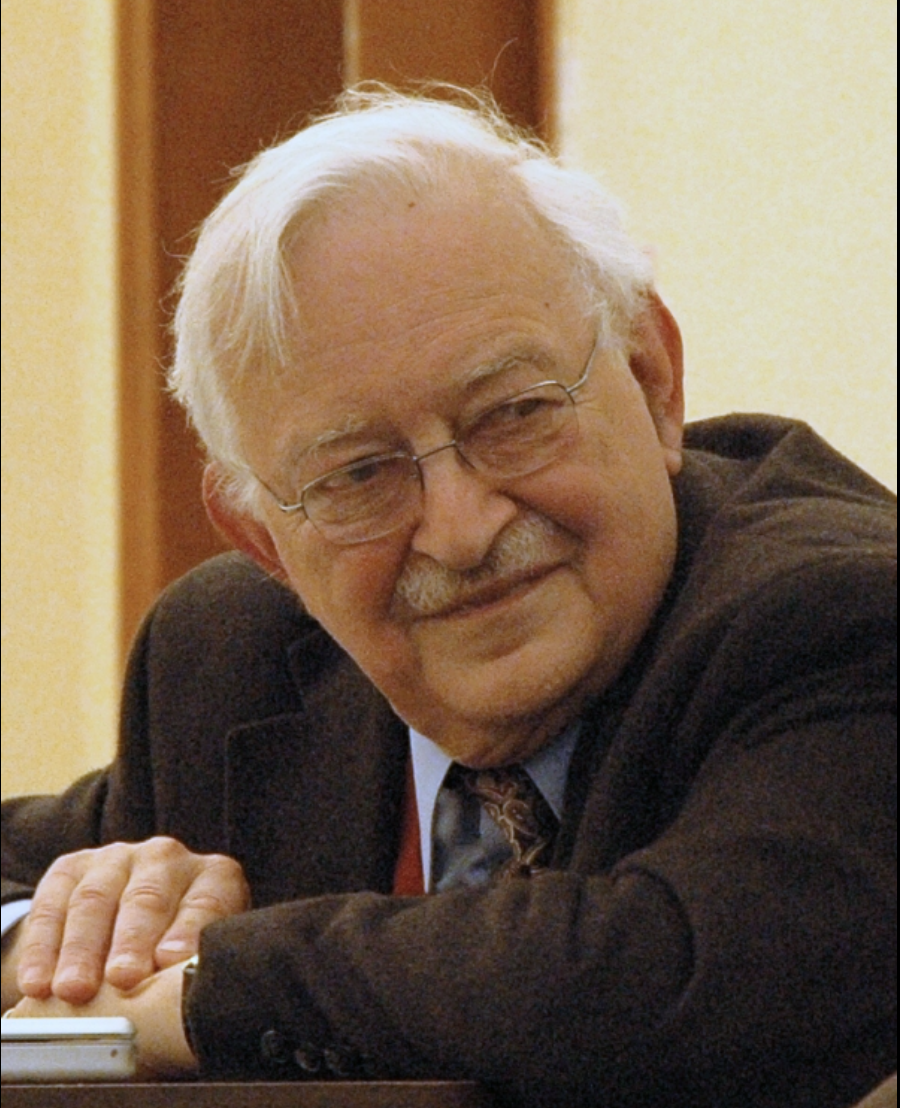
Immanuel Wallerstein (September 28, 1930 – August 31, 2019) was an American sociologist and economic historian. He is perhaps best known for his development of the general approach in sociology which led to the emergence of his world-systems approach. He was a Senior Research Scholar at Yale University from 2000 until his death in 2019, and published bimonthly syndicated commentaries through Agence Global on world affairs from October 1998 to July 2019. He was the 13th president of International Sociological Association (1994–1998). Politically, he considered himself on the "independent left" and was active in a variety of organizations. He argued that we are in the transition from our existing capitalist world-economy to some new system, and that the great political struggle of our time is about which new kind of systemic order will replace our existing one. A new systemic order could be better or worse, depending on our collective ability to push the worldwide decision in one direction or another. He believed that a crucial element in this is a vast debate about the kind of better system we wish to build, and saw the Reimagining Society Project as one of the ways to further this collective debate.
ZNetwork is funded solely through the generosity of its readers.
Donate




