


Apartheid is a powerful word, with evocations of the South African experience and with implications of crimes against humanity. The United Nations does not use this word loosely. It rarely enters UN reports, and is not heard from the lips of UN officials. But now, in a report released on March 15 in Beirut, Lebanon, the UN has proclaimed that Israel ‘is guilty of the crime of apartheid’. This is a very significant judgment, one with important ramifications for the UN, for the International Court of Justice and for the international community.
In 2015, the United Nations Economic and Social Commission for Western Asia (ESCWA) was charged by its member-states – the eighteen Arab states in West Asia and North Africa – to study whether Israel has established an apartheid regime. ESCWA asked two American academics — Richard Falk and Virginia Tilley — to undertake the study. Falk had been the UN Special Rapporteur on the situation of human rights in the Palestinian territories from 2008 through 2014. Tilley had served as a Chief Research Specialist in South Africa’s Human Sciences Research Council, which had produced a study in 2009 showing apartheid-like conditions in Israel and the Palestinian Occupied Territory. The report that they have now produced makes the ‘grave charge’ that Israel is guilty of apartheid not only in the West Bank, Gaza and East Jerusalem — the Occupied Territory — but also within its own boundaries and against the Palestinian refugees. This is a very sharp report, which will be hard for Israel to ignore.
End of two state consensus?
Israel’s Prime Minister Benjamin Netanyahu was in Washington DC recently to meet U.S. President Donald Trump. At that meeting, Mr. Trump seemed to disregard the international consensus towards the creation of two states. In fact, as this report and others show, the two-state solution has been long vitiated. The Israeli government’s illegal Jewish settlement project in the West Bank and its virtual annexation of East Jerusalem makes it impossible to imagine the establishment of Palestine in that region. What exists is a one-state, with Israel having exercised its dominion in the entire land west of the Jordan River, but a one-state with an apartheid system, with Israeli Jews in a dominant position over the Palestinians. The new UN report speaks to this disturbing apartheid situation not only in the Occupied Territory of the West Bank and East Jerusalem, but in all of Israel.
One reason why the Israeli government is unwilling to consider a one-state solution with equal rights for all Israelis and Palestinians is what they call a ‘demographic threat’. If the 12 million Palestinians — exiles and refugees included — would be citizens of this one-state, then they would dwarf the six million Jews in the country. The UN report argues that Israel is a ‘racial regime’ because its institutions are premised on maintaining a Jewish nation by techniques of suppression and expulsion.
Gross discrimination
Palestinians who have Israeli citizenship (ezrahut) do not have the right to nationality (le’um), which means that they can only access inferior social services, face restrictive zoning laws, and find themselves unable freely to buy land. Palestinians in East Jerusalem are reduced to the status of permanent residents, who have to constantly prove that they live in the city and that they do not have any political ambitions. Palestinians in the West Bank live ‘in ways consistent with apartheid’, write the authors of the UN report. And those who are exiled to the refugee camps in Lebanon, Syria and Jordan have absolutely no rights to their homeland. All Palestinians – whether those who live in Haifa (Israel) or in Ain al-Hilweh (Lebanon) suffer the consequences of Israeli apartheid. This indignity is punctuated with laws that humiliate the Palestinians. The latest law — the Muezzin Bill — imposes limits on the Muslim call to prayer in Israel and East Jerusalem.
Matters would be less grave if the Israeli political system allowed Palestinians rights to make their case against apartheid-like conditions. Article 7(a) of the Basic Law prohibits any political party from considering a challenge to the State’s Jewish character. Since this description of the Israeli state renders Palestinians as second-class citizens, their voting rights are reduced to merely an affirmation of their subordination. As the UN report suggests, ‘An analogy would be a system in which slaves have the right to vote but not against slavery’. Palestinians inside Israel and in the Occupied Territories, as well as in enforced exile, are forbidden to fight to change the terms of politics in Israel. This roadblock is the reason why the UN report appeals to the international community to live up to its commitments.
Since most of the world’s states have signed the Convention Against Apartheid, they are now obliged to act to punish instances of apartheid. Two recommendations from the report stand out. First, the authors ask that the International Criminal Court (ICC) investigate the situation in Israel. The ICC’s Prosecutor Fatou Bensouda opened an investigation on Israel’s 2014 bombing of Gaza and on the illegal settlements in the West Bank. Ms. Bensouda has indicated that she is not averse to a full assessment of Israel’s actions. Whether she will now widen the scope of her investigation to the apartheid nature of the state is a separate matter. Second, the report asks that member states allow ‘criminal prosecutions of Israeli officials demonstrably connected with the practices of apartheid against the Palestinian people’. Earlier this year, former Israeli Foreign Minister Tzipi Livni cancelled a trip to Brussels when she was alerted that the prosecutors there might arrest her using the principle of universal jurisdiction. Such actions raise the cost to Israel for its apartheid policies.
When the UN Security Council declared late last year that Israel’s settlements in the Occupied Territories were illegal, then there was worry in Israel that Ms. Bensouda would accelerate her work. Others in Israel said that there was nothing new in the resolution, which neither used the word ‘grave’ to describe the situation nor considered Israeli actions to be a war crime. But the new report does both. If it is acknowledged that Israel is an apartheid state, then this is tantamount to war crime (in the 1977 Protocol Additional to the Geneva Conventions) and to a crime against humanity (in the 1973 Apartheid Convention and the 1998 Rome Statute of the ICC).
India’s reaction
To prepare the ground for Prime Minister Narendra Modi’s trip to Israel later this year, his Foreign Secretary S. Jaishankar will soon go to Israel. Word comes from the Ministry of External Affairs that it is likely that Mr. Modi will not visit the Occupied Territories, which will be a snub to Palestine. India’s overall reaction to this report will define Mr. Modi’s attitude towards Israel. The appearance of this report – and its strong conclusions – should give Mr. Modi pause before he shreds decades of consensus for Palestine from India. Will India take leadership in upholding international law as it did in the fight against South African apartheid? Or will India back away from high principle and settle for arms deals and empty rhetoric?
Vijay Prashad, Professor of International Studies at Trinity College, is the author of ‘The Death of the Nation and the Future of the Arab Revolution’

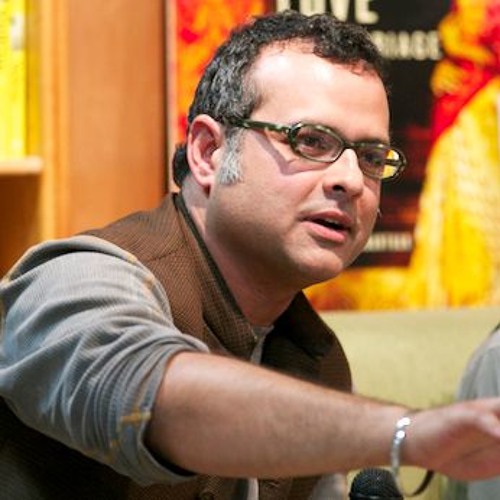
Vijay Prashad is an Indian historian, editor, and journalist. He is a writing fellow and chief correspondent at Globetrotter. He is an editor of LeftWord Books and the director of Tricontinental: Institute for Social Research. He is a senior non-resident fellow at Chongyang Institute for Financial Studies, Renmin University of China. He has written more than 20 books, including The Darker Nations and The Poorer Nations. His latest books are Struggle Makes Us Human: Learning from Movements for Socialism and (with Noam Chomsky) The Withdrawal: Iraq, Libya, Afghanistan, and the Fragility of U.S. Power. Tings Chak is the art director and a researcher at Tricontinental: Institute for Social Research and lead author of the study “Serve the People: The Eradication of Extreme Poverty in China.” She is also a member of Dongsheng, an international collective of researchers interested in Chinese politics and society.
ZNetwork is funded solely through the generosity of its readers.
Donate




