


There’s no doubt about it: Colin Powell is a great performer, as he showed yet again at the U.N. Security Council the other day. On television, he exudes confidence and authoritative judgment. But Powell owes much of his touted credibility to the fact that he’s functioning inside a media bubble that protects him from direct challenge.
Powell doesn’t face basic questions like these:
* You cite Iraq‘s violations of U.N. Security Council resolutions to justify the U.S. launching an all-out war. But you’re well aware that American allies like Turkey, Israel, and Morocco continue to violate dozens of Security Council resolutions. Why couldn’t other nations claim the right to militarily “enforce” the Security Council’s resolutions against countries that they’d prefer to bomb?
* You insist that Iraq is a grave threat to the other nations of the Middle East. But, with the exception of Israel, no country in the region has made such a claim or expressed any enthusiasm for a war on Iraq. If Iraq is a serious threat to the region, why doesn’t the region feel threatened?
* You say that the Iraqi regime is committed to aggression. Yet Iraq hasn’t attacked any country for more than 12 years. And just eight days before Iraq‘s invasion of Kuwait on Aug. 2, 1990, the U.S. envoy to Baghdad gave what appeared to be a green light for the invasion when she met with Saddam Hussein. An Iraqi transcript of the meeting quotes Ambassador April Glaspie: “We have no opinion on your Arab-Arab conflicts, such as your dispute with Kuwait. Secretary (of State James) Baker has directed me to emphasize the instruction … that Kuwait is not associated with America.” Mr. Powell, why don’t you ever mention such information?
* Washington tilted in favor of Iraq during its war with Iran in the 1980s. Like other U.S. officials, you emphasize that Saddam Hussein “gassed his own people” and used chemical weapons against Iran, but you don’t talk about the intelligence data and other forms of assistance that the United States provided to help Iraq do those things. If the history of Baghdad‘s evil deeds is relevant, why aren’t facts about U.S. complicity also relevant?
* When you warn that the U.N. Security Council “places itself in danger of irrelevance” if it fails to endorse a U.S.-led war on Iraq, aren’t you really proclaiming that the United Nations is “relevant” only to the extent that it does what the U.S. government wants?
If Colin Powell faced such questions on a regular basis, his media halo would begin to tarnish. Instead, floating inside a media bubble, he moves from high-level meetings to speeches to news conferences where tough questions are rare. And when Powell appears as a guest on American media outlets, he doesn’t need to worry that he’ll encounter interviewers who’ll challenge his basic assumptions.
Tacit erasure of inconvenient history — including his own — is integral to the warm relationship between Powell and U.S. news media. There’s a lot to erase. For instance, in January 1986, serving as a top aide to Pentagon chief Caspar Weinberger, he supervised the transfer of 4,508 TOW missiles to the CIA, and then sought to hide the transaction from Congress and the public. No wonder: Almost half of those missiles had become part of the Iran-Contra scandal’s arms-for-hostages deal.
As President Reagan’s national security adviser, Powell worked diligently on behalf of the contra guerrillas who were killing civilians in Nicaragua. In December 1989, Powell — at that point the head of the Joint Chiefs of Staff — was a key player behind the invasion of Panama.
The Gulf War catapulted Powell to the apex of American political stardom in early 1991. When he was asked about the Iraqi death toll from that war, Powell said that such numbers didn’t interest him.
At the U.N. on Feb. 5, in typical fashion, Powell presented himself as an implacable foe of terrorism — much as he did on Sept. 11, 2001, when he denounced “people who feel that with the destruction of buildings, with the murder of people, they can somehow achieve a political purpose.” While aptly condemning the despicable hijackers who murdered thousands of people on that day, Powell was also using words that could be applied to a long line of top officials in Washington. Including himself.
At this point it seems that only a miracle could prevent the Bush administration from going ahead with its plans for a horrific attack on Iraq, sure to kill many thousands of civilians. The U.S. leaders will demonstrate their evident belief that — in Colin Powell’s apt words — “with the destruction of buildings, with the murder of people, they can somehow achieve a political purpose.” To the extent that the media bubble around them stays airtight, Powell and his colleagues are likely to bask in national acclaim.
______________________________________
For an in-depth analysis of Colin Powell’s role in setting the media agenda for a war on Iraq in 2003, go to www.accuracy.org/unilateral.pdf — an excerpt from “Target Iraq: What the News Media Didn’t Tell You,” a new book by Norman Solomon and Reese Erlich, just published as a paperback original by Context Books. For the prologue to the book and information on how to order, go to: http://www.contextbooks.com/newF.html

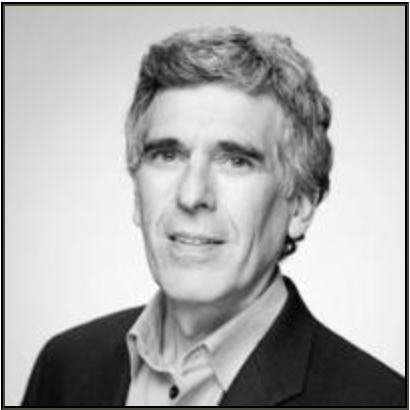
Norman Solomon is the national director of RootsAction.org and executive director of the Institute for Public Accuracy. The paperback edition of his latest book, War Made Invisible: How America Hides the Human Toll of Its Military Machine, includes an afterword about the Gaza war.
ZNetwork is funded solely through the generosity of its readers.
Donate




