


From this morning, thousands of policemen will guard Israel’s children as they return to school after the summer vacation. For this reason, it is worth recalling that just an hour’s drive away, yesterday also marked the end of the summer vacation for Palestinian children, whose lives are in greater danger, but who have no protection.
About a million Palestinian children were due to return to school yesterday, and their fate is of abiding interest for Israelis, too. The children’s route to school and their very lives are more threatened now than at any previous time in the 35-year history of the occupation.
First, the dead – 294 Palestinian children will not be going to school any more. They were killed by Israeli soldiers in the past two years. Twenty-three children were killed during the summer vacation alone – 7 in July and 16 in August (according to the Palestinian Human Rights Monitoring Group).
Basel and Abir Abu Samra were killed in front of their father’s face by a tank shell fired at them while they were working in their vineyard near Nablus. Jamil and Ahmed Abu Aziz were killed by a tank shell while they were cycling on the streets of Jenin. Every Palestinian mother who sends her children off to school in the morning on streets where tanks and armored personnel carriers rove, and where soldiers with light trigger fingers are on patrol, is exposing them to serious danger.
In addition to the dead there are the wounded and the maimed, whose number no one knows, and who rarely get proper rehabilitation. Nur Ismail, for example, is a boy who lost both legs in a mysterious explosion next to his house that killed his two brothers. He is not going to school because his parents can’t afford to buy him prosthetic legs.
The situation of the healthy children offers no cause for rejoicing. They spent most of their vacation under curfew, imprisoned in hot, stuffy, overcrowded houses, usually without anything to entertain themselves with – no computers, no books, no video or other games of any kind.
Nearly a quarter of them are suffering from what the U.S. Agency for International Development (USAID) defined as malnutrition. Most of them receive only the most basic foodstuffs – bread, rice and olive oil – and hardly ever taste vegetables, fruits, meat or dairy products.
Sweets and other childhood delicacies are no more than a distant dream. In the Deheishe refugee camp next to Bethlehem, for example, the only thrill the children had during the vacation was to throw stones at the armored personnel carriers that declared curfew every day. That was a dangerous game.
In the long days under curfew, the children saw what unemployment, humiliation and frustration did to their parents. Some of them could see from their windows as settler children splashed merrily in their swimming pools, while the taps in their own homes yielded water once a week. On the days when curfew was lifted, the Palestinian children were still confined to their towns and villages, with no possibility of visiting friends or relatives in neighboring localities.
Some of them made their way by stealth into Israel, taking their lives in their hands in order to beg or offer cheap items for sale at road junctions, as their families’ breadwinners. They were often caught by soldiers, who humiliated and often beat them.
Many of these children are also suffering from traumas. The scenes of killing and devastation they saw in the Jenin refugee camp or in the Gaza neighborhood where the Israel Air Force dropped a one-ton bomb or in the Nablus casbah will haunt them for life. Even many of those who were not eyewitnesses to such events were exposed to the atrocity images that were broadcast ceaselessly by Arab television stations.
Some of the schools were also damaged. According to the Palestinian Ministry of Education, 145 schools were struck by Israeli army fire and shelling. A case in point is the Abd el-Majid Thaya School just outside Tul Karm, which in recent years has come to be known as the “peace school,” was partially destroyed by tank shells. Some of the teachers were unable to reach the school because of curfew or closure.
Very often the students, too, will not be able to get to their school, and the school year will again be seriously disrupted. In any event, these children have little to look forward to in life. This is the baggage that the Palestinian children will carry, but they are not the only ones who will bear the burden.

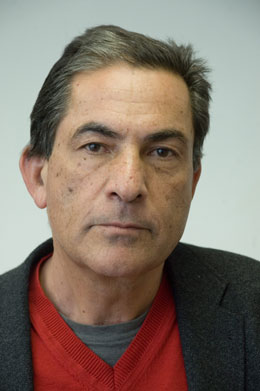
Gideon Levy is a Haaretz columnist and a member of the newspaper's editorial board. Levy joined Haaretz in 1982, and spent four years as the newspaper's deputy editor. He is the author of the weekly Twilight Zone feature, which covers the Israeli occupation in the West Bank and Gaza over the last 25 years, as well as the writer of political editorials for the newspaper. Levy was the recipient of the Euro-Med Journalist Prize for 2008; the Leipzig Freedom Prize in 2001; the Israeli Journalists’ Union Prize in 1997; and The Association of Human Rights in Israel Award for 1996. His new book, The Punishment of Gaza, has just been published by Verso Publishing House in London and New York.
ZNetwork is funded solely through the generosity of its readers.
Donate




