


Walking through Camp Marielle Vive outside Valinhos in the State of Sao Paulo, Brazil, produces a deep sense of déjà vu. This camp resembles so many other communities of the desperately poor on our planet. According to the UN, one in eight people or about 1 billion human beings live in such precariousness. The homes are made of a jumble of materials — blue tarpaulin sheets and bits of wood, corrugated iron sheets and old bricks. A thousand families live in Camp Marielle Vive, named after the Brazilian socialist Marielle Franco, who was killed in March 2018.
The land on which this community has been built belongs to a real-estate speculator, named El Dorado. The owner has done nothing with this land for years. The people who live on it have made it into a small town in months.
Landlessness is a serious problem in Brazil. The people who live in Camp Marielle work in the towns and cities that ring São Paulo, the largest city in the country. It is impossible for poorly-paid workers to find a place to live. As wages stagnate and rents rise, the problem becomes more acute. The people who live in places such as Camp Marielle are wanted for their labour, but not for their lives.
Along the road to the Camp are seemingly endless developments of gated housing. Even from the road, these houses and condominiums feel alienating — their residents trapped behind high-walls, their social interactions limited. The real estate speculators who own the land underneath Camp Marielle want to build more such houses. The State favours them rather than the thousands of people who have built homes in the Camp.
Landless Workers’ Movement
Camp Marielle is not an ordinary ‘slum’, a word with so many negative connotations. The mood in many of these places is desolate, with criminal gangs and religious organisations providing them with fragile social glue. But Camp Marielle exudes a different aura. Flags of the Landless Workers’ Movement (MST) are everywhere. A quiet and friendly dignity saturates the residents, many of whom wear t-shirts or caps from their organisation. There is a school-house where the children study, and a community kitchen where some of the residents eat their three meals. The food is basic, but nutritious. Nearby is a small clinic, where a doctor comes once a week.
At the entrance to the Camp there are two checkpoints, both patrolled by residents in turn. The guards are friendly, but careful. The Camp fears attack from the State and from the owners of the land. On July 18, the residents conducted a peaceful march to demand that their occupancy be recognised by the authorities and that the local government provide them with water.
Everything seemed normal, the march routine, the atmosphere peaceful. Then, Leo Ribeiro, a car shop owner, drove his truck, which had a Brazilian flag, directly at the protesters, killing 72-year-old Luis Ferreira da Costa, a resident of the Camp. His house is now a little shrine, his MST hat hanging from a hook on the front door. Ribeiro is in prison. But gloom from the death defines conversations inside the Camp.
About two million people have — with the flag of the MST — seized land across Brazil. Brazil’s land is some of the most polluted on the planet, with high doses of pesticides and fertilisers saturating the soil.
On this MST land, agro-ecological techniques have been used for agriculture. There are a few family gardens in Camp Marielle. Tassi and Gerson — two activists of the MST — explain that when they have access to water, the residents will begin to grow food for themselves.
But they might not get the chance to do so. In mid-August, Judge Bianca Vasconcelos ruled that the families had to be evicted. The Camp residents have vowed to fight this order.
Two young girls, Ketley Júlia and Fernanda Fernandes, talk about their lives in the Camp. Vindictively, the municipal authorities had stopped allowing the school-bus to pick up children from the Camp. But Camp Marielle Vive has its own school-house. What pleased the girls was that each Sunday, they meet at the Camp’s school-house and learn English. “When you write the article about our Camp,” they said, “we will translate it into Portuguese.”
Vijay Prashad is the director of the Tricontinental Institute.

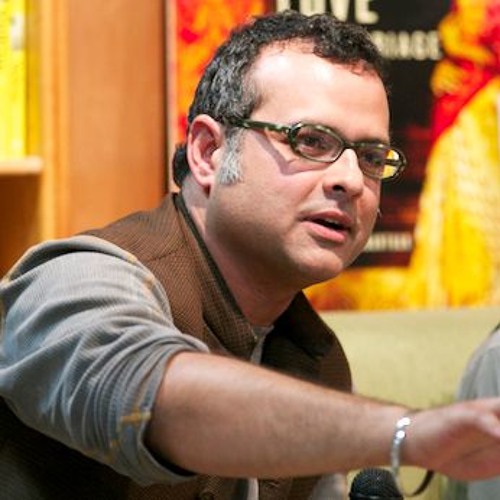
Vijay Prashad is an Indian historian, editor, and journalist. He is a writing fellow and chief correspondent at Globetrotter. He is an editor of LeftWord Books and the director of Tricontinental: Institute for Social Research. He is a senior non-resident fellow at Chongyang Institute for Financial Studies, Renmin University of China. He has written more than 20 books, including The Darker Nations and The Poorer Nations. His latest books are Struggle Makes Us Human: Learning from Movements for Socialism and (with Noam Chomsky) The Withdrawal: Iraq, Libya, Afghanistan, and the Fragility of U.S. Power. Tings Chak is the art director and a researcher at Tricontinental: Institute for Social Research and lead author of the study “Serve the People: The Eradication of Extreme Poverty in China.” She is also a member of Dongsheng, an international collective of researchers interested in Chinese politics and society.
ZNetwork is funded solely through the generosity of its readers.
Donate




