


"Mankind must put an end to war or war will put an end to mankind."
-John F. Kennedy
It is not the threat of violence that weighs on the people of Iraq. It is the omnipresent occurrence of violence that has resulted in the desperate nation wide chant, "We are tired. All we want is for normal life to return."
Recently, an eight-year-old Iraqi girl was shot by US soldiers when their convoy ran into a crowd of Shiite pilgrims traveling to the holy city of Karbala in southern Iraq.
Sunday, a week ago, three explosions echoed across Baghdad, leaving one person dead and wounding another 20.
The very next day, a suicide car bomber struck a US patrol in the northern city of Mosul, killing four American soldiers and their Iraqi interpreter. It was the single deadliest attack on US forces in nine months. Two days later, an off-duty security guard of Iraqi Vice President Adel Abdul-Mahdi was wounded along with a pedestrian when a bomb attached to his car detonated. On the same day, back in Mosul, a car bomb targeting a police patrol wounded three Iraqi policemen.
Wednesday, at least 12 people were killed and 40 wounded in bombings across Baghdad targeting Shia pilgrims. The next day, in an attack also targeting pilgrims, eight people were killed and another 56 wounded. Friday, a female suicide bomber killed 40 and wounded 84 others in yet another attack on Shia pilgrims south of Baghdad, who were flocking to a religious festival.
Mile after mile of concrete walls segregate erstwhile mixed neighborhoods in Baghdad. This prodigious Balkanization of the capital city has had the twin effect of attenuating violence and displacing every fourth resident from their homes.
There are times when I feel quite relaxed, going around in the end winter mild temperatures. Unlike during previous trips, when the specter of violence was impossible to ignore, today I am able to choose to not pay attention to imminent threats. Invariably, I’m yanked back to the reality of existence in Baghdad where "normal" comprises fatal currents of danger streaming indiscriminately through the course of each life.
Driving slowly towards the main exit area of a locality where we had been conducting interviews, our interpreter Ali, my colleague and I found the usually clogged roadway completely empty. "What’s going on here," Ali asked incredulously. On looking out, I found both sides of the street blocked by the police and armed forces. Coincidentally, the car bomb I mentioned earlier had exploded in this very area and the fact was not lost on any of us as we grimly acknowledged the stark reminder that there was no escaping the game of chance in this benighted country.
Hulking Ford pickup trucks full of Iraqi police toting AK-47s and mounted in the back with heavy caliber machine guns prohibited access to the main road. Through the traffic snarl, we cautiously inched our way back to a side street, joining a crawling row of cars, hoping to circumnavigate the cordoned section. Unfortunately for us, our effort failed and we were forced back toward the dreaded area. Since we were unaware of the cause of the crisis, we hoped to somehow exit unscathed as the vehicles were actually moving.
The hope proved quite fanciful as our car approached and moved past the reason for the blockade. Across the median from us was a suspected car bomb in an abandoned jeep in front of an Iraqi police compound. Clad in heavy armor, an ambling green beetle of a bomb expert sifted through the innards of the vehicle that had all its doors open. Iraqi police guarding the road a block away on either side watched with apprehension.
Our procession, with no option but forward, took us within 30 yards of the suspected bomb. The mood inside the car was taut and thick with tension fit to be sliced as gingerly we made our way further from the jeep.
Such abrupt and frequent reminders that anywhere in the city, any car could be a bomber, result in an all pervasive condition of stress, inconceivable for people living in normal places where normal residents like G.W. Bush, who engineer such conditions in far off lands, can glibly inform an overly gullible normal public that … it’s all aimed at achieving peace.
Meanwhile, in this less than normal place where our former resident strove so hard to bring peace, it is impossible to move for ten minutes in any direction without encountering Iraqi police in pickup trucks, their sirens blaring to push traffic to the brink as they plow their way through to some crisis area. Traffic in Baghdad is notoriously frustrating at the best of times without the added delays that these convoys cause.
"Boys with toys," says Ali, and we both laugh as yet another police convoy with blaring sirens roared past. Inventing humor has been the most effective coping mechanism in Iraq for decades. Rather than letting the countless impediments paralyze them, Iraqis have taught themselves to negotiate the uphill struggle to survive through humor and laughter.
Like every man in Iraq, Ali has done his time in the military. He fought in the Iran/Iraq war during the 1980s and in the subsequent invasion of Kuwait, during which he earned ten Medals of Honor for saving as many Iraqi lives as a medic.
As my colleague Jason and I sat with him to lunch in the gentle warmth of the sun, Ali started to tell us some of his stories.
"I was attached to an artillery battery during the al-Faw campaign against the Iranians. We shot six shells a minute at them, as did the hundreds of other artillery."
Al-Faw is a small port on the al-Faw Peninsula in Iraq near the Shatt al-Arab River, a few kilometers from the Persian Gulf.
"The Iranians had been occupying it for over a year, but in 1988 we launched a surprise attack and drove them back," he continued, "Can you imagine hundreds of artillery batteries, all shooting six shells per minute, for hours? Literally every square meter had a crater from one of our shells. The place looked like the moon."
To my query about the number of Iranians killed, Ali responded after the briefest pause, "Impossible to count. There were bodies everywhere. I could tell you endless stories about the things I’ve seen."
Like most Iraqis I know, Ali, too, managed to change the topic gracefully. He narrated a "funny" story about the invasion of Kuwait, "We drove into Kuwait like tourists," he recollected. "We had people asking us what we were doing. They invited us to join them for kebabs and tea. It was very pleasant, actually. It stayed that way for one week, until an armed resistance began shooting at us; then it grew ugly."
When food arrived, Ali declared war, "Now it’s time for me to invade my shawarma!" We laughed heartily.
He described an occasion when he had been rocketed by a US F-16. "I was manning an artillery gun on a ridge when I saw the jet turning and launching the missile. The next thing I knew, my gun and I were blown into the air and landed upside down."
"Were you hurt?" I asked.
"No … just shaken up a bit," he chuckled.
The stories continued as we dove into our lunch and sipped our sodas. For the briefest spell, it almost felt as if we were three friends enjoying a normal late afternoon lunch and each other’s company.
The spell broke when a convoy of several lumbering pickup trucks full of Iraqi police drove past us on the busy street adjoining the pavement restaurant where we sat. The sirens and the gruff voice ordering cars out of their way did not interrupt the conversation and our mood. It merely planted us back to a normal day in Iraq.
——————————————————————————–
Dahr Jamail, an independent journalist, is the author of "Beyond the Green Zone: Dispatches From an Unembedded Journalist in Occupied Iraq," (Haymarket Books, 2007). Jamail reported from occupied Iraq for eight months as well as from Lebanon, Syria, Jordan and Turkey over the last four years.

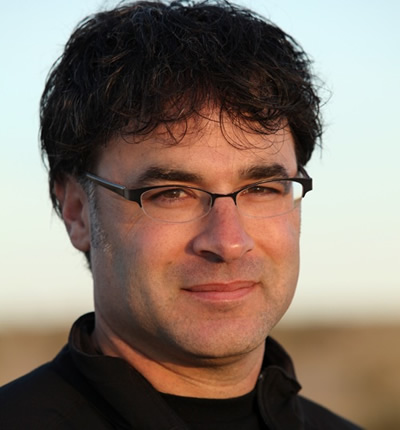
Dahr Jamail is the Baghdad correspondent for The NewStandard. Jamail, a political activist from Anchorage, Alaska, first traveled to Iraq in November 2003 to write about the effects of the US occupation on the Iraqi people. After nine weeks covering Iraq under occupation, he returned to the US and addressed audiences in Alaska and the Northeast about his experience. He has recently returned to Iraq in order to continue reporting on US occupation and privatization. You can view his dispatches and articles at http://newstandardnews.net/iraq.
ZNetwork is funded solely through the generosity of its readers.
Donate




