


Remember those television interruptions? They were often “just a test” back in the 60s and 70s and now are more likely an interruption about a severe storm or other potential crisis. Black Lives Matter, is this, the interruption of the regularly scheduled program. The interruption addresses all of society, is urgent and explains a deep crisis, that without a massive change in all of ways in which people live and govern, will continue and deepen. Thus, we must all pay close attention and change – everything. The regularly scheduled program is not coming back on.
Interruptions of business as usual are a fairly common form of protest, particularly when an issue is urgent and the movement is speaking to society as a whole, as is the case with Black Lives Matters. The “target” of the movement is not one or two officials or government agencies, who, if they accepted demands from the movement would alleviate the cause. The issue is much deeper and broader, and is about all of society – of a long silent society in the face of systematic killing, discrimination and oppression of a people (and people perceived to be a part of this group) – people of African decent.
Martin Luther King Jr day, on January 20th, was another of many such occasions for interruptions of life and practice as usual. Black Lives Matter groups throughout the United States interrupted the ways in which most people have come to commemorate Martin Luther King Jr. Day. Instead of a parade, series of speakers or a concert, groups used forms of direct action and did not allow business as usual to go forward, from the blocking of bridges and traffic to the idea of the memory of MLK Jr..
“Today is the day when we reclaim MLK’s radical legacy,” April Thomas, a participant in Black.Seed, a part of Black Lives Matter in Oakland California, exclaimed, as she was chained between two cars. She and two dozen others stopped traffic on the Bay Bridge for over an hour. “I’m out here for Tamir Rice, Rekia Boyd, for my mother, myself, for Harriet Tubman.” The bridge blockade was part of culmination of actions to protest the police killing of Mario Woods earlier in the month, where a number of police officers together all opened fire on a black man. The video of the killing shows him with his arms at his sides at the time of the shooting – whether he had a knif is still at issue. In their statement on the bridge shut down action, they write, “Black.Seed, a Black, queer liberation collective, has shut down the Bay Bridge as a show of resistance to a system that continues to oppress Black, Queer, Brown, Indigenous and other marginalized people throughout the Bay Area.”
In Denver Colorado, thousands interrupted a ceremonial event for Martin Luther King Jr. Day. A parade usually led by the mayor with a series of official speeches afterwards was turned into a a protest, with thousands led by Black women, cutting off the parade and turning it into a march. Five Black women then took the stage and put forward demands, beginning with, “The Black Lives Matter 5280 family stands before you at the feet of this giant, this RADICAL, Dr. Martin Luther King. We stand because we have come to reclaim truth, and we have come to unapologetically declare that Black Lives Matter.”
In Seattle, a few thousand people marched to commemorate Martin Luther King, with formal speeches planned in a rally format. The plan however was interrupted by a few hundred people from Black Lives Matter who led a segment of the march to act and speak out against gentrification. For a few hours they shut down Ike’s Pot Shop (with locks on the doors) that they argued represents gentrification in the neighborhood. For the hours the shop was closed speakers addressed the history of gentrification, what could be done about it, police violence and the growing movement for Black Lives. Evana Enabulele, a participant in the actions commented, “It is symbolic. The theme for this action was gentrification. It is ironic that we are marching blocks away yet the black community is being pushed out. Honoring MLK’S dream is to keep the fight going whether it’s gentrification to food justice.”
Black Lives Matter is an interruption into a long silent society. It is an interruption intended to make everyone uncomfortable. And at the same time, it is an interruption that is organized based in love, care, trust and community. It is forcing society to stop – and doing so with an internal politics striving to manifest alternatives.
Alicia Garza, one of the three women co-founders of Black Lives Matter puts forward, “Black Lives Matter is an ideological and political intervention in a world where Black lives are systematically and intentionally targeted for demise. It is an affirmation of Black folks’ contributions to this society, our humanity, and our resilience in the face of deadly oppression.”
The second part of this statement is as important as the first. Black Lives Matter is an interruption and a forcing of society to stop business as usual – think of the now global image of thousands everywhere putting their hands up, as Michael Brown in Ferguson Missouri did right before the police shot him – with the statement “hands up don’t shoot.” Black Lives Matter is this gesture, the putting up of our hands, but not in resignation, not as a plea, it is with power, it is as a stopping of things as they are – and in that same space of refusing, it is opening different relational forms, ones based in care and love.
The movement began yes, with the hashtag, Black Lives Matter, suggested by co-founder Patrisse Cullors, but also with a lesser known “love letter to black folks,” penned by Alicia Garza, one of the other movement’s co-founders. She ends the letter with the words, “Black people. I love you. I love us. Our lives matter.”
The ways in which the movement organizes in different locations has this care and love in common. It is organized without hierarchy, striving to create power together, most often led by women, and with the intention of developing space for all to be leaders. Care and trust are paramount, as is love. Harkening elements of the Southern Non Violent Coordinating Committee’s practice of participatory and direct democracy, with the direct action, striving for a Beloved Community.
Feelings are central to all movements – we, as society however, are unaccustomed to talking about these feelings – whether feelings of rage and fear or love and trust. Black Lives Matter brings feelings to the fore – making us see and feel with the movement. It is a movement that interrupts business as usual, and our collective preconceived ideas of what it means to build a movement and be a society in movement.

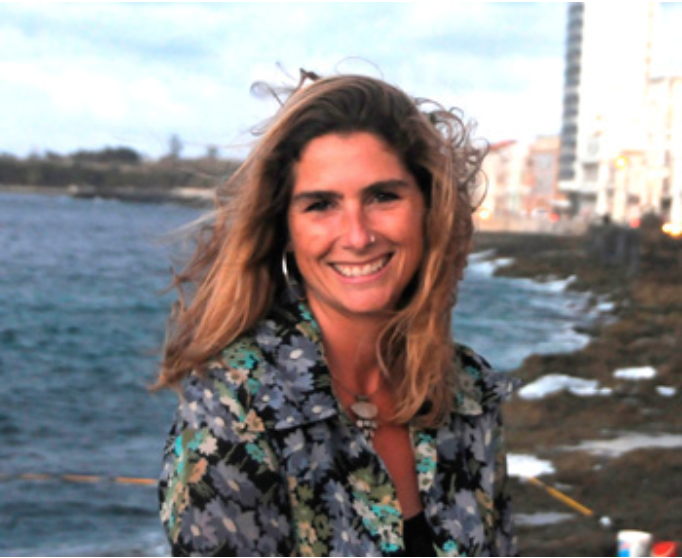
Marina Sitrin is a writer, lawyer, teacher, organizer, militant and dreamer. She is the editor of Horizontalism: Voices of Popular Power in Argentina (2006) AK Press, Edinburgh & Oakland, CA; Spanish edition, Horizontalidad: Voces de Poder Popular en Argentina (2005) Chilavert, Buenos Aires. She is the author of Everyday Revolutions: Horizontalism & Autonomy in Argentina (2012) Zed Books. Together with Dario Azzellini, they have co-authored They Can’t Represent US! Reinventing Democracy From Greece to Occupy (2014) Verso Books and Occupying Language: The Secret Rendezvous with History and the Present (2012) Zucotti Park Press. Marina’s work has been published in: The International Journal of Comparative Sociology, Znet, Yes! Magazine, Tidal, The Nation, Dissent!, Upping the Anti, Journal of Aesthetics and Protest, alternet.org, and Prensa Latina, among others. She has a JD in International Womens’ Human Rights from CUNY Law School and a PhD in Global Sociology from Stony Brook University. She has a PhD in Sociology and a JD in International Human Rights.
ZNetwork is funded solely through the generosity of its readers.
Donate




