


BAGHDAD, Apr 14 (IPS) – As sectarian killings continue to rise in Iraq, the central morgue in Baghdad is unable to keep up with the daily influx of bodies. *
The morgue is receiving a minimum of 60 bodies a day and sometimes more than 100, a morgue employee told IPS on condition of anonymity.
“The average is probably over 85,” said the employee on the morning of April 12, as scores of family members waited outside the building to see if their loved ones were among the dead.
The family of a man named Ashraf who had been taken away by the Iraqi police Feb. 16 anxiously searched through digital photographs inside the morgue. He then found what he was looking for.
“His two sons were killed when Ashraf was taken,” said his uncle, 50-year-old Aziz. “Ashraf was a bricklayer who was simply trying to do his job, and now we see what has become of him in our new democracy.”
Aziz found that the body of Ashraf was brought to the morgue Feb. 18 by the Iraqi police two days after he was abducted. The photographs of the body showed gunshot wounds in the head and bludgeon marks across the face. Both arms were apparently broken, and so many holes had been drilled into his chest that it appeared shredded..
A report Oct. 29, 2004 in the British medical journal The Lancet had said that “by conservative assumptions, we think about 100,000 excess deaths or more have happened since the 2003 invasion of Iraq.”
In an update, Les Roberts, lead author of the report said Feb. 8 this year that there may have been 300,000 Iraqi civilian deaths since the invasion.
Such findings seem in line with information IPS obtained at the Baghdad morgue.
Morgue official said bodies unclaimed after 15 days are transferred to the cemetery administration to be catalogued, and then taken for burial at a cemetery in Najaf. As he spoke, three Iraqi police pick-up trucks loaded with about 10 bodies each arrived at the morgue.
At the cemetery administration, an official told IPS: “From February 1 to March 31, we’ve logged and buried 2,576 bodies from Baghdad.”
Requests by IPS to meet with administration officials at the Baghdad morgue were turned down for “security reasons.”
Several surveys have pointed to large numbers of civilian deaths as a result of the U.S.-led occupation.
Iraqiyun, a humanitarian group affiliated with the political party of interim president Ghazi al-Yawir reported Jul. 12 last year that there had been 128,000 violent deaths since the invasion. The group said it had only counted deaths confirmed by relatives, and that it had omitted the large numbers of people who simply disappeared without trace..
Another group, the People’s Kifah, involved hundreds of academics and volunteers in a survey conducted in coordination with “grave-diggers across Iraq.” The group said it also “obtained information from hospitals and spoke to thousands of witnesses who saw incidents in which Iraqi civilians were killed by U.S. fire.”
The project was abandoned after one of the researchers was captured by Kurdish militiamen and handed over to U.S. forces. He was never seen again. But in less than two months’ work, the group documented about 37,000 violent civilian deaths up to October 2003.
The Baghdad central morgue alone accounts for roughly 30,000 bodies annually. That is besides the large number of bodies taken to morgues in cities such as Basra, Mosul, Ramadi, Kirkuk, Irbil, Najaf and Karbala.
More writing, commentary, photography, pictures and images at http://dahrjamailiraq.com

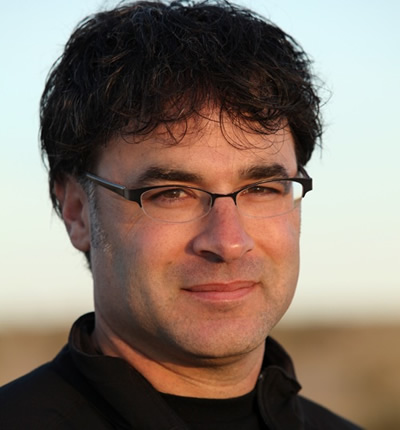
Dahr Jamail is the Baghdad correspondent for The NewStandard. Jamail, a political activist from Anchorage, Alaska, first traveled to Iraq in November 2003 to write about the effects of the US occupation on the Iraqi people. After nine weeks covering Iraq under occupation, he returned to the US and addressed audiences in Alaska and the Northeast about his experience. He has recently returned to Iraq in order to continue reporting on US occupation and privatization. You can view his dispatches and articles at http://newstandardnews.net/iraq.
ZNetwork is funded solely through the generosity of its readers.
Donate




