


It is hard not to notice the shift in the emphasis of American left protest and activism since 9-11. The so-called “new New Left†is looking a bit more like the old New Left as the struggle against corporate globalization makes way for – or transforms into – the struggle against American imperialism. The leading targets of protest have changed from the World Trade Organization, the International Monetary Fund and the World Bank to the White House and the Pentagon. The emphasis has shifted from resisting transnational corporate-financial domination of the planet to stopping a specifically American assault on one nation – Iraq.
A related emphasis resists the state-capitalist “homeland†assault on people of color and economic disadvantage and on domestic civil liberties. This assault comes along with the at once regressive and repressive “War on Terrorism†like white on rice.
Important goals of the global justice movement – democracy, ecologically sustainable development, and the reduction of economic inequality within and between nations – seem to have been placed on the back burners.
Is this shift in focus disturbing? Has the American left been set back, pushed to the margins, rolled back to the 1960s, so to speak, forced to step down from a promising movement for planetary democracy, equality and environmental sustainability to mount a sadly elementary retro-struggle against one nation’s imperialism and racism?
No. We should resist such pessimistic conclusions for at least five related reasons. First, far from experiencing rollback, the current US peace movement is picking up where the movement against the Vietnam War left off. Even before the Bush attacks, hundreds of thousands have marched in massive protests bigger than the largest anti-Vietnam War marches of the 1960s. More than two-thirds of the American population opposes the White House’s plans to unilaterally launch “war†on Iraq. The American media scandalously underreports these remarkable developments.
Second, the antiwar movement provides an opportunity for global justice activists to overcome some of their movement’s well-known problems in developing a diverse and mass base. For one thing, it presupposes among its members much less sophisticated knowledge about and conscious alienation from the dominant system of socioeconomic management (capitalism) than does the global justice movement. To be sure, there is little mysterious about how the global “trade†and financial institutions rape people and the earth. Still, it is frankly easier to talk to people about how the White House is preparing to directly and quickly kill innocent Iraqis than about how corporate globalization murder people and ecosystems more slowly around the world.
At the same time, the proposed war’s regressive domestic impact, diverting yet more scarce (for social functions at least) public money from social to military expenditures, is also more immediately and graphically evident than the (undeniably negative) domestic consequences of corporate globalization. And the drive for war is strongly linked to an illegitimate, unpopular (indeed non-elected), and brazenly plutocratic Presidency in ways that redound to the benefit of the peace movement.
The greater transparency and simplicity of the antiwar relative to the a “anti-globalization†movement means that the peace movement provides an opportunity for global justice activists to make meaningful contact with progressively inclined people they would not otherwise meet. Global justice activists should welcome and learn from the peace movement’s clearer connection to domestic poverty and race issues. Excessively white and middle-class, the global justice movement has failed to develop adequate linkages to the urban racial and social justice movement and to communities of poverty and color. Those communities experience more than their share of difficulties (racial profiling, crime, poverty, mass incarceration, gentrification and a shortage of affordable housing, toxic waste sites, etc.) right here at home, in the eye of globalization’s hurricane.
Third, the Bush administration’s push for war in the Middle East is significantly driven by world capitalism’s environmentally disastrous enmeshment with oil, gas and the internal combustion engine. There is a significant positive world-ecological dimension to the antiwar movement, which includes groups calling for the development of clean energy alternatives to toxic planetary petroleum addiction.
Fourth, current US war plans are about far more than Iraq. Beyond Persian Gulf oil, the real “prize,†writes John Pilger, “is nothing less than the world: all the riches above and below the earth and sees.†The Bush administration’s aim is to seize on what it perceives as a great historic opportunity granted by the collapse of Communism and by the jetliner attacks of September 2001. It is to make it clear to the entire world who’s boss – that there is and can for the foreseeable future be just one powerful state and that those who resist this reality can expect their lives to become Hell. As John Pilger puts it, “the Bush cabal believe they are at a Hiroshima-like juncture in history – that they have at their disposal the means to start the world over in an apocalyptic spasm of swift and terrifying violence. The War Party believes itself to be embarked on an epochal, world-altering mission, and they are determined this moment not be squandered.†Its “intent,†Pilger writes, “is to break the will of the species. Iraq is merely a convenient stage.â€
Pilger’s analysis might sound like a left-dystopian fantasy, but it is based on a sober reading of US planners’ documentary record. That record includes the White House’s latest National Security Strategy of the United States, a pivotal September 2000 report issued by the Project for a New American Century, the US Space Command’s chilling Vision for 2020 (advancing American global “Full Specter Dominance†in defense of transnational corporate interests), Paul Wolfowitz’s 1992 Pentagon policy paper Defense Planning Guidance, and the horrifying book Shock and Awe: Achieving Rapid Dominance, penned by Harlan Ullman of the federally contracted “Defense Group, Inc.’s†Rapid Dominance Study Group and posted on the web site of the U.S. “Defense†Department’s Command and Control Research Program.
Fifth, our current confrontation with the tightening fist of specifically American state power is not really a diversion from the struggle against corporate globalization. According to a mistaken analytical tendency among some “anti-globalization†activists, modern transnational globalization has de-nationalized world power and stripped away the relevance of the nation state. This tendency correctly observes that the architects of globalization seek to institutionalize the special rights and privileges of multinational corporations that owe allegiance to no single nation state. It rightly notes that globalization reduces the policy leverage of national governments, even in the core (formerly called First World) states of the world capitalist system.
It forgets, however, that globalization remains fundamentally imperial. Globalization continues to be all about enriching the First World relative to the peripheral and semi-peripheral states. It is no accident that the dramatic expansion and acceleration of world economic activity during the last 50 years has been accompanied by a considerable widening of wealth disparities between the core and the periphery. Also more than coincidental to recent globalization is the emergence and expansion of giant First World and especially American corporations that dwarf corporations based outside the core.
No nation has benefited more than the United States, which comprises 6 percent of the world’s population but controls more than a third of the world’s resources. This was acknowledged by the New York Times’ openly imperialist foreign policy columnist Thomas Friedman in a Times Magazine cover story published as the US prepared to bomb Serbia nearly four years ago. Before the collapse of “communism,” Friedman argued, the key justification for US globalism/imperialism was the protection of the world’s “market democracies†through “containment†of the Soviet Union. In the post-Cold War era, according to Friedman, the justification from the United States’ “overarching interest” in guaranteeing the geopolitical stability necessary for “sustaining globalization.†That “overarching interest” consists of the fact that “the US wins” in a planet ruled by “free market” and “democratic” capitalism. This is because America, “had,†in Friedman’s overblown neo-liberal rhetoric, “over 200 years to invent, regenerate, and calibrate the checks and balances that keep markets free” and “has many of the most sought-after goods and services in the world market…Globalization,†Friedman concluded, “-is-US.”
In reality, the Soviets contained the Americans more than vice versa and neither American nor global capitalism is either “democratic†or based on “free markets.†Still, Friedman’s identification between globalization and American economic power is not inaccurate.
Global justice activists have also tended to downplay the very significant extent to which modern globalization is fundamentally shaped and underpinned by core and especially US state power and policy. The world’s leading transnational corporations owe their existence and much of their exalted market power to government charters and to numerous forms of core state protection (including but hardly restricted to tariffs and intellectual property rights) and subsidy (including the US “Defense†budget).
The great world financial institutions that do so much to impose the disastrous neo-liberal model on non-core states – kicking away the ladder of development by denying similar state protections, guidance and subsidy to poorer nations – are the deliberate creatures of the US government (specifically of the US Treasury). It is with the blessing, directives and funding of that government that the IMF and the World Bank impose the First-World friendly “free trade, free investment†model on nations that need precisely the opposite if they are ever to follow in the footsteps of the exalted core states.
There is, of course, a strong military dimension to the US state power that “sustains globalization.†Here again Friedman is offensive but useful. “The hidden hand of the market,†he wrote in the piece cited above, “will never work without a hidden fist. McDonald’s,†he argued, “cannot flourish without McDonnell Douglas, the designer of the F-15. And the hidden fist that keeps the world safe for Silicon Valley technologies is called the US Army, Air Force, Navy and Marine Corps.â€
The terrible jetliner attacks of September 2001 have combined with the collapse of the Soviet deterrent more than a decade ago to provide the corporate-plutocratic arch-imperialists in the Bush administration an opportunity to brandish Freidman’s “hidden hand†like no time in recent memory. They are showing and flexing the iron fist of empire partly in defense and pursuit of embarrassingly obvious economic or interests. The smell of petroleum wafts with great pungency in the current “oiligarchic†White House.
It is a mistake, however, to see the Bush gang as little more than corporate lackeys who have surrendered state power to transnational energy corporations. They have attained significantly autonomous, unprecedented and for them intoxicating military state power – far greater than anything they could expect to experience in the so-called “private sector.â€
September 11th’s imperial aftermath has provided the American and global left a powerful wake up call. It has graphically reminded us that the state has yet to “wither away†and that globalization is still imperialism, replete with a heavy dose First World and especially US state, including military, power.
The nature of the complex relationship between capitalist globalization and the world state system will spark debate among left intellectuals for years to come. In the meantime, we would do well to appreciate the wisdom of a basic formulation from one such intellectual – veteran Egyptian Marxist Samir Amin. As Amin told fellow attendees at the World Social Forum in Porto Allegre, Brazil, “there is not on the one hand social and economic problems and on the other hand political and military problems…One cannot defeat the IMF and other institutions that obey the United States without defeating the military strategy of the United States. As long,†Amin noted, “as the aggressive, fascist strategy of the United States is not defeated, an alternative globalization will not be possible.†Exactly.
Paul Street is director of research at the Chicago Urban League and a frequent ZNet and Z Magazine contributor.

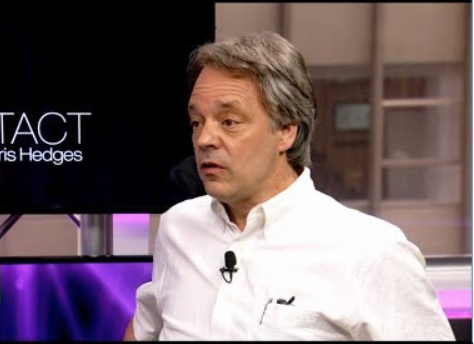
Paul Street is an independent radical-democratic policy researcher, journalist, historian, author and speaker based in Iowa City, Iowa, and Chicago, Illinois. He is the author of more than ten books and numerous essays. Street has taught U.S. history at numerous of Chicago-area colleges and universities. He was the Director of Research and Vice President for Research and Planning at the Chicago Urban League (from 2000 through 2005), where he published a highly influential grant-funded study: The Vicious Circle: Race, Prison, Jobs and Community in Chicago, Illinois, and the Nation (October 2002).
ZNetwork is funded solely through the generosity of its readers.
Donate




