


Those who trample human rights in Israel are having a field day: Look at the behavior of the Americans in Iraq, they say. Every time troops open fire at a checkpoint, every killing of a civilian, every picture of siege and plight, leads to merriment here. The United States, the cradle of democracy, the leader of the free world, is behaving like us.
According to one report, “IDF officers find it difficult to stop smiling” when they hear the reports of the war in Iraq. From now on, no one will be able to criticize their conduct in the territories. The New York Times reported that Israel even hastened to suggest that the United States learn from its experience in the use of tanks, helicopters and bulldozers in the center of cities and refugee camps.
Similar delight has also gripped those wishing to curb the media in Israel: Look at how America is censoring the images of the war in its media – no coffins and no prisoners, how the media has volunteered enthusiastically to enlist in the war effort. And how they fired the courageous reporter Peter Arnett, without so much as batting an eyelash, for expressing his opinions on enemy television.
This keeping in line with the behavior of the United States is another case of the collateral damage of this base war. America is not an example for anything. Even before going to war, there was no way it could serve as a role model, and going to this unjustified war in Iraq has deprived it completely of the right to serve as a light unto the nations and the Jews in upholding freedom, morality and human rights.
So let us not be quick to conclude that what America is allowed to do, we are allowed to do, too. Neither they nor we have the right to kill needlessly, to harm and humiliate civilians, deprive them of their freedom, starve them, take away their livelihood and trample on their sovereignty, or to recruit the media for the war effort.
America, which is fighting an illegal war, is an occupier in every respect.
Long before the first Iraqi civilian was shot at a checkpoint, the United States was in no position to take pride in all its deeds, either at home or externally. Not all its citizens benefit from the fact that it is a large democracy.
For example, in the past 29 years, 816 people have been executed in the United States, as in the darkest of regimes, with a clear bias against the blacks. Studies show a black murderer is 11 times more likely to be executed than a white person convicted of the same crime. More than one-fifth of the children in the country that is supposed to be the leader of the free world live below the poverty line, and 41 million Americans, among them 8.5 million children, do not have any form of medical insurance. Is that the definition of a just society? Some 3.5 million Americans are registered as homeless, though the real number is estimated to be twice that many.
A country that launches a war at a cost of hundreds of billions of dollars when it lacks the ability to care for millions of homeless people and poor children cannot consider itself enlightened or a liberator.
Outside its borders, the United States cannot always serve as a moral model, either. Hundreds of thousands of people, including many civilians, have been killed and murdered in the wars and military campaigns it has launched since World War II – such as in Vietnam, Cambodia and elsewhere – and in the murderous regimes the United States has brought to power or assisted.
However, even if the United States had been a beacon of justice, its decision to go to war in Iraq and turn its army into an occupying force deprives it of the right to be considered a paragon. To the remarks of journalist Thomas Friedman (in an interview to Ari Shavit in Haaretz Magazine over the weekend), to the effect that the American democracy becomes aggressive when threatened, we should add that democracies cease to be such when they become occupiers. France, Belgium, Britain, the United States and Israel, all of them enlightened democracies, lost the justness of their cause when they became occupying powers. That is inevitable.
As soon as the United States starts to become mired in the occupation, today’s enlightened soldiers will become tomorrow’s inhuman troops. They will lose the remnants of their moral image and will kill, destroy and abuse. The children huggers will become the children persecutors, the food distributors will turn into agents of starvation, the wound healers will block ambulances at checkpoints, the liberators will become jailers. Humiliating the occupied and stripping them of their rights will become the norm. The liberated Iraqi people will pay in the form of heavy losses, hunger and humiliation, even if these are temporary. And they will not forget. That is the impact of occupation, whether in the narrow alleys of a Gaza Strip refugee camp or in the sprawling city of Baghdad.
If there is one lesson Israel can impart to the Americans, it is that every occupation is appalling, that it tramples the occupied and corrupts the occupier. If the Americans pause for a moment to see what is going on in the Tul Karm refugee camp and in the casbah of Nablus, they will see what they will soon become. And if Israelis look at what is happening in Iraq, perhaps they will understand that it is not the Palestinians but, above all, we who have created the present situation.
An occupier is an occupier, whether he comes from a democracy that is two- and-a-quarter centuries old or from “the only democracy in the Middle East.”

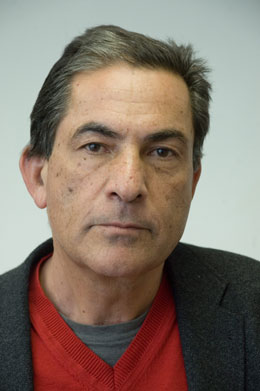
Gideon Levy is a Haaretz columnist and a member of the newspaper's editorial board. Levy joined Haaretz in 1982, and spent four years as the newspaper's deputy editor. He is the author of the weekly Twilight Zone feature, which covers the Israeli occupation in the West Bank and Gaza over the last 25 years, as well as the writer of political editorials for the newspaper. Levy was the recipient of the Euro-Med Journalist Prize for 2008; the Leipzig Freedom Prize in 2001; the Israeli Journalists’ Union Prize in 1997; and The Association of Human Rights in Israel Award for 1996. His new book, The Punishment of Gaza, has just been published by Verso Publishing House in London and New York.
ZNetwork is funded solely through the generosity of its readers.
Donate




