


Anticipation is in the air. Three weeks divide the first round (October 7) of the Brazilian presidential election from the second (October 28). In the first, the far right’s candidate, Jair Bolsonaro, won the most votes, a convincing 46%. His closest challenger, Fernando Haddad of the Workers’ Party (PT), earned 29% of the votes. Had Mr. Bolsonaro won over 50% of the votes, he would have become Brazil’s eighth president since the fall of the military dictatorship (1964-1985). However, there are as many as those who voted for him who are not for him, saying that they will never vote for him. The hashtag — #EleNão or #NotHim — continues to resonate. But, many people fear that in the time left, Mr. Bolsonaro might appeal to enough of the deeply polarised electorate to win.
Regional pull
Polling data favours Mr. Bolsonaro. Datafolha announced that 58% of voters favour him over the 42% who are with Mr. Haddad. In the country’s northeast, the centre of Brazil’s Afro-Brazilian population, Mr. Haddad has a clear lead, while in the populous and more prosperous south-east, Mr. Bolsonaro wins by a considerable margin. It will not be easy to alter this margin. Nonetheless, the PT is struggling to build a ‘national anti-fascist front with the left and progressive, humanist and liberal democratic sections’, says Professor Monica Bruckmann who teaches politics at the Federal University of Rio de Janeiro. The PT, she says, hopes to attract the 54% who voted against Mr. Bolsonaro in the first round. Mr. Haddad and the PT, she adds, warn that a victory for Mr. Bolsonaro will mean a ‘regression to the darkest days of authoritarian governments in Brazil and in Latin America’.
Dark days ahead
Evidence of these ‘darkest days’ has not had to wait for the final election result. In Salvador, a Bolsonaro supporter murdered a 63-year-old man who had said he voted for Mr. Haddad. In Nova Iguaçu, a 41-year-old transgender person was attacked by Bolsonaro supporters who chanted, “such trash should die.” In Porto Alegre, a gang of men attacked a 19-year-old woman who was carrying an LGBTQ flag and had an anti-Bolsonaro sticker; they carved a swastika on her skin. In Copacabana, along the beach, men without shirts and in military fatigue pants jogged in formation down the avenue for Mr. Bolsonaro. At football matches, the cheer has gone up — Bolsonaro will kill all queers. Several reporters have also been threatened and attacked, according to the Brazilian Association of Investigative Journalism (Abraji).
Mr. Bolsonaro, a military man, has surrounded himself with military men, which include the vice-president, defence minister and infrastructure minister. Mr. Bolsonaro has said he would give greater powers to the police and the armed services to tackle crime. He is on record as having said that the main problem with the military dictatorship is that it did not kill enough people. Ugliness governs the Bolsonaro camp.
Why would more than half the Brazilian electorate elect a man who wants to reintroduce a military dictatorship to the country; someone who is vicious against women and homosexuals? The parallels with U.S. President Donald Trump are easy — both men are open in their intolerance and fantasise about using the hammer to shape society in their image. But, there is something specific in Mr. Bolsonaro’s rise. He has emerged — for the elite — as the antidote to the left-leaning policies of the PT and — for the middle class — as an angel, a Seraphim (as Ms. Bruckmann put it), against violence.
The extreme right
There is no question that Brazil’s oligarchy despised the governments of the PT (2002-2016). During this period, the PT under Presidents Luiz Inácio Lula da Silva and Dilma Rousseff used high commodity prices to conduct a modest redistribution scheme for the very poor. Hunger was defeated, and educational opportunities opened up to the most marginal sections (Mr. Haddad was the minister of education in both the Lula and Rousseff governments). Ms. Rousseff’s impeachment — a legislative coup — and Mr. Lula’s arrest — a judicial coup — pushed the PT out of power. Polls show that if the judiciary had not denied Mr. Lula from running in this presidential election, he would have won outright in the first round. Prof. Valter Pomar, who teaches international relations at the Federal University of ABC and a leader of the PT, says the ‘normal’ right encouraged the extreme right to overthrow Ms. Rousseff and ensnare Mr. Lula. They thought that this extreme right — represented by Mr. Bolsonaro — would do their work and then get out of the way. Of course, Mr. Bolsonaro is going nowhere.
Democracy does not appeal to Brazil’s oligarchy. Terrible violence in the country (175 murders a day in 2017) has turned some of the middle class towards the hardness of Mr. Bolsonaro and against the PT’s progressive values. It is this combination of the oligarchy — which controls the media and has depicted Mr. Bolsonaro as reasonable — and the middle class that is pushing him forward. It is still possible for the verdict on October 28 to go against Mr. Bolsonaro. A quarter of voters did not cast their ballot on October 7, despite voting being mandatory in Brazil. If they do come to the polling booths, it will be hard to predict this election.
Vijay Prashad is the Director of Tricontinental: Institute for Social Research and the Editor of ‘Strongmen’

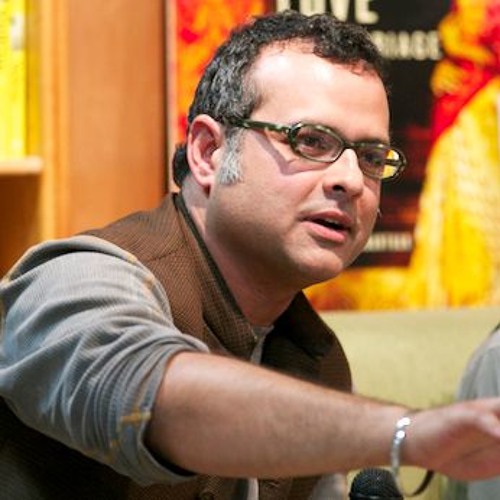
Vijay Prashad is an Indian historian, editor, and journalist. He is a writing fellow and chief correspondent at Globetrotter. He is an editor of LeftWord Books and the director of Tricontinental: Institute for Social Research. He is a senior non-resident fellow at Chongyang Institute for Financial Studies, Renmin University of China. He has written more than 20 books, including The Darker Nations and The Poorer Nations. His latest books are Struggle Makes Us Human: Learning from Movements for Socialism and (with Noam Chomsky) The Withdrawal: Iraq, Libya, Afghanistan, and the Fragility of U.S. Power. Tings Chak is the art director and a researcher at Tricontinental: Institute for Social Research and lead author of the study “Serve the People: The Eradication of Extreme Poverty in China.” She is also a member of Dongsheng, an international collective of researchers interested in Chinese politics and society.
ZNetwork is funded solely through the generosity of its readers.
Donate




