The New York Times has been suggesting that major bondholders – both national and private banks – are discretely reducing their bond holdings, out of a fear of nominal inflation. How discrete can it be if it is discussed in The New York Times?

Everyone is hoping that no one panics and sells too rapidly. And if someone does that they do it one mega-instant after my discrete withdrawals. Of course, no one wants to withdraw too soon – and not too late. So, when one arrives at a pre-panic moment, no one can be sure, which more or less guarantees the sudden collapse of the bond market.

We know we’re in a pre-panic moment when we are discussing it. But why now and not before? Because so much paper money has been earned in runaway market profits based on no real increase in surplus-value that the market has caught up with the bond market, and therefore one discretely withdraws from the bond market.

In addition, the paid workers seek higher wages, everywhere. So many workers have been forced out of the labor market that there is now a labor-available shortage. And this makes bonds still a safe haven. Confusion, confusion!

Everyone becomes more protective – of self, of country. And it is self-reinforcing. Even countries using strong anti-protectionist rhetoric like Canada practice it nonetheless or suffer internal political loss.

All this is what happens in a structural crisis of the world-system, in which wild swings of everything is the reality. Pre-panics are one of these wild swings.


ZNetwork is funded solely through the generosity of its readers.

Donate
Donate

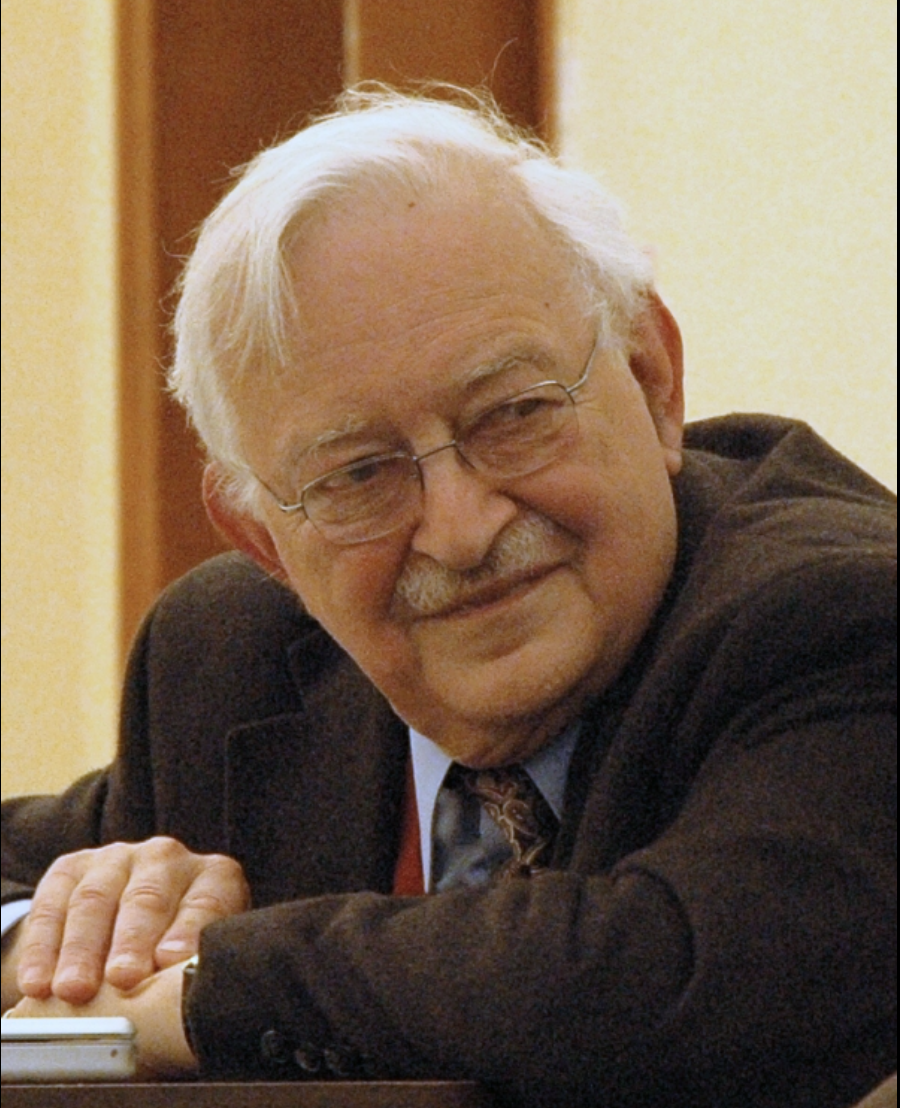
Immanuel Wallerstein (September 28, 1930 – August 31, 2019) was an American sociologist and economic historian. He is perhaps best known for his development of the general approach in sociology which led to the emergence of his world-systems approach. He was a Senior Research Scholar at Yale University from 2000 until his death in 2019, and published bimonthly syndicated commentaries through Agence Global on world affairs from October 1998 to July 2019. He was the 13th president of International Sociological Association (1994–1998). Politically, he considered himself on the "independent left" and was active in a variety of organizations. He argued that we are in the transition from our existing capitalist world-economy to some new system, and that the great political struggle of our time is about which new kind of systemic order will replace our existing one. A new systemic order could be better or worse, depending on our collective ability to push the worldwide decision in one direction or another. He believed that a crucial element in this is a vast debate about the kind of better system we wish to build, and saw the Reimagining Society Project as one of the ways to further this collective debate.

1 Comment

Leave A Reply

Subscribe

All the latest from Z, directly to your inbox.

Institute for Social and Cultural Communications, Inc. is a 501(c)3 non-profit.

Our EIN# is #22-2959506. Your donation is tax-deductible to the extent allowable by law.

We do not accept funding from advertising or corporate sponsors.  We rely on donors like you to do our work.

ZNetwork: Left News, Analysis, Vision & Strategy

Subscribe

All the latest from Z, directly to your inbox.

This is your article this month.

We’re glad you keep coming back. If Z’s work has informed, challenged, or inspired you, that’s no accident: there are no paywalls, no ads, and no billionaire owners here, and there never will be. Independent media survives because readers choose to support it.

Billionaires fund their own media. We fund ours. Help us reach 1,000 sustaining donors:

Number of donors678
Our goal1,000

Sustainers at $9/month or more receive the digital Z Magazine.

Already a sustainer? Click here and we won’t ask again. Thank you!

Your reading count is stored only in your browser and is never sent to us.

Sound is muted by default.  Tap 🔊 for the full experience

CRITICAL ACTION

Critical Action is a longtime friend of Z and a music and storytelling project grounded in liberation, solidarity, and resistance to authoritarian power. Through music, narrative, and multimedia, the project engages the same political realities and movement traditions that guide and motivate Z’s work.

If this project resonates with you, you can learn more about it and find ways to support the work using the link below.

Independent media is not disappearing because the ideas are weak.

It is disappearing because platforms reward speed, outrage, and algorithmic visibility over thoughtful analysis.

More than 100,000 people read Z every month, free of paywalls, ads, and billionaire owners. It takes fewer than 1 in 100 of them to fund all of it: 1,000 donors who keep Z independent, for everyone, and build what comes next.

Number of donors678
Our goal1,000

Sustainers at $9/month or more receive the digital Z Magazine.

Subscribe

Join the Z Community – receive event invites, announcements, a Weekly Digest, and opportunities to engage.

Exit mobile version