


As the editor of Nonviolence News, I collect 30-50 stories of nonviolence in action each week. Each story offers us a take-away lesson for our own work for change. These lessons offer us best practices and pro-tips from our fellow human beings who are working for change around the world. We can learn from their successes and their set-backs. We can let their brilliance inspire us and we can stand on their giant shoulders as we strive to make a difference in our own way.
Nonviolence is one of humankind’s greatest achievements – and it’s just getting started. It’s up to us to take it further, use it more skillfully, and discover how nonviolence can help us be -and make – the change we wish to see in the world.
Here are ten pointers for change makers from this week’s news:
In the wake of last year’s strike by Los Angeles teachers, random searches of students are coming to an end district wide — landing a blow against racism and racial profiling in schools. The LA teachers strike was a successful campaign for a set of economic justice goals, but its impact continues, showing how powerful strikes can have an on-going effect. Sometimes, this is true even when campaigns don’t succeed in achieving their stated goals. The 2011 Occupy protests didn’t end inequality, but they did break the issue through mass consciousness in an unprecedented way that continues to affect everything from wages to presidential campaigns.
Amidst hate crimes, Syracuse University students are pressing for major changes in the institution’s approach to diversity and inclusivity. An earlier campaign created and achieved 9 out of 12 demands. After that success, they revised some of the remaining demands, added a new set, and launched a new occupation of buildings. The checklist of demands shows clearly how direct action is succeeding, where the university is dragging its feet, and what work remains to be done. Demands can be powerful – as these students are proving.
Gandhi would appreciate the thousands of people who are fighting climate change one backyard garden at a time. It’s a constructive program – a type of action that everyone can do, builds strength and community, and addresses the problem all at the same time. Constructive programs, like the 2,000 Climate Victory Gardens, have the added benefit of involving people who might not otherwise get involved in the movement. Plus, you get fresh veggies. What’s not to love?
More than 150 middle-and-high school students from across the United States gathered to demand that senators “stand up or step aside” on the climate crisis. “We’re done playing by the rules,” they say. Their boldness reminds us that when the rules of the game are meant to make some people the perpetual winners and others the losers, it’s time to quit playing by the rules – and perhaps it’s time to change the game entirely. Nonviolent action puts the ball in our court and gives us a whole different way to push for change than through conventional channels.
- Spain’s Women’s Soccer Shows Us the Power of Organizing for Everyone Following the players’ strike in November, female soccer players in Spain have won the league’s first ever collective bargaining agreement and league-wide contracts. Their story shows the power of organizing for – and with – everyone instead of petitioning for individual pay raises. It’s a team sport, after all.
- Extinction Rebellion’s “Lawngate” Shows How Property Destruction Can Backfire
The notorious climate emergency rebels stirred up controversy by digging up the lawn of Cambridge University. The press dubbed the blowback as “Lawngate.” Was “Lawngate” nonviolent direct action or vandalism? Did it serve the climate justice movement or backfire on Extinction Rebellion? Property destruction is often controversial both inside movements and among the general population. When considering its worth as part of an action, it’s important to consider how it will be perceived by your society. Will the reaction serve your cause . . . or detract from it? Did the property destroyed have a negative image which would make the public sympathetic, or was the action taken seen as simply inchoate destruction?
In a surprising shift, Utah Republicans are supporting a plan that aims to reduce emissions over air quality concerns and global warming. “If we don’t think about it, who will?” they say. How did that happen? By talking “common cents,” economic sustainability of ski slopes, and clean air quality. When we’re organizing for change, it’s helpful to speak the language of the people we want to change, not our own framings and phrasings. After all, we’re convinced. It’s the other people we’ve got to persuade to make a shift.
Colombians have been campaigning for change for months. They’ve used a wide variety of tactics, mobilized rotating sectors of the populace, and launched several waves of mass action. Why? Because single marches or one-up demonstrations aren’t enough. Real change comes from sustained, creative, strategic sets of actions designed to achieve specific goals, and then keep building.
Sudan recently had a successful nonviolent revolution. The victory did not come without sacrifice – more than 100 people were killed in just one of the violent crackdowns by the regime. Recently, they’ve been campaigning to protect soldiers who were fired for refusing to hurt the people. Why does this matter? Because it’s helpful to build allies with the very people who are ordered to crack down on your movement. And, it’s important to make sure that soldiers who refuse to hurt their people are rewarded, not punished. It sends an important message to their fellow soldiers, leaders, and others about the society’s expectations around mass movements.
Half the battle is finding a better option. The effort to halt and end gentrification recently shared a set of best practices for fighting gentrification, including everything from Community Land Trusts to Tenant Buy Options. The list highlights success stories, offers solutions to entrenched injustices, and comes in handy when you need to come up with an alternative for your community.
These are just 10 of the 50+ stories in this week’s issue of Nonviolence News. There’s a lot to learn from our fellow human beings’ efforts toward peace and justice. If we pay attention, stay alert, and take notes, we might find our own work for change grows in power, strength, and wisdom.
Rivera Sun, syndicated by PeaceVoice, has written numerous books, including The Dandelion Insurrection. She is the editor of Nonviolence News and a nationwide trainer in strategy for nonviolent campaigns.

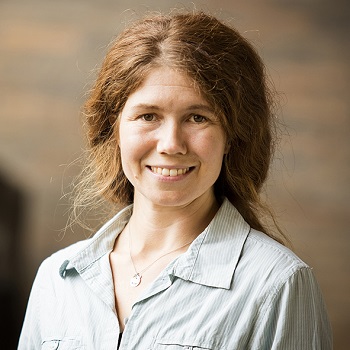
Rivera Sun, syndicated by PeaceVoice, has written numerous books, including The Dandelion Insurrection and the award-winning Ari Ara Series. She is the editor of Nonviolence News, Program Coordinator for Campaign Nonviolence, and a nationwide trainer in strategy for nonviolent campaigns. Rivera has been honored for her literary work and social justice efforts in the Americans Who Tell The Truth Portrait Series.
ZNetwork is funded solely through the generosity of its readers.
Donate




