


The Rs 60,000 crore farm loan waiver is a positive step towards addressing agrarian distress. But the 25,000 crore booster for new farm initiatives, which focuses entirely on agribusiness, corporate agriculture and food retail, is likely to lead to further despair. The focus should be on sustainable agriculture
This is sensible economics. Finance Minister P Chidambaram has, for the first time, scripted a budget as if the people matter. Also, this will probably be the first budget in the history of Independent India that will be discussed and debated as far as in village chaupals.
For the ailing farm sector, the Rs 60,000 crore waiver on agricultural loans for small and marginal farmers comes at a time when two farmers are known to be committing suicide every hour. If Chidambaram had only announced the debt waiver and debt relief scheme four years ago, thousands of ill-fated farmers could perhaps have been saved from taking the fatal route to escape the humiliation that comes with mounting indebtedness.
Let us not forget that it was in mid-2006 that Prime Minister Manmohan Singh visited the suicide-prone belt of Vidarbha and announced a relief package of Rs 3,750 crore. Embarrassed at no let-up in the number of farmer suicides, he subsequently said that the relief measures would begin to show results after six months. And it did. Six months after the prime minister’s visit, the suicide rate doubled. From one suicide every eight hours, it is now one every four hours.
If Manmohan Singh had provided a debt waiver to the distressed farmers of Vidarbha, the number of suicides would certainly have come down. Instead, the government spelled out a package that helped banks and input suppliers. No wonder, the several committees that examined the ineffectiveness of the Vidarbha farm package failed to pinpoint the reason for its failure.
Good economics is related not only to corporate profits but also to human survival. By focusing attention on the farm sector that employs, directly or indirectly, 72% of the country’s population, the UPA government’s last budget has actually made an effort to address the issue of agrarian distress. In addition to farmers, Chidambaram has also reached millions of landless labourers by extending the reach of the National Rural Employment Guarantee Scheme (NREGS) to all 596 rural districts.
Writing off outstanding farm loans will benefit 4 crore farmers, nearly 40% of the country’s entire farming community. Although the waiver only benefits farmers who have taken institutional credit from nationalised banks, rural banks and cooperative institutions, it’s a good beginning. There is no denying this. The finance minister now needs to look into the possibility of helping those farmers who have taken loans from arhityas and private moneylenders.
What worries me though is the faith the finance minister has in the Rs 25,000 crore booster for new farm initiatives, called the Rashtriya Krishi Vikas Yojana, to be launched by the states in the next four years, and the 14-point resolution adopted by the National Development Council (NDC) which aims at achieving 4% growth in agriculture by the end of the Eleventh Five-Year Plan. With the entire focus on integrating domestic agriculture with the global economy, and bringing in agribusiness, corporate agriculture and food retail as saviours, the roadmap being chalked out is likely to lead to further despair.
Ploughing Rs 25,000 crore into agriculture may seem like a mammoth effort to double agricultural growth rates. But for each of the 29 states, the average support will not exceed Rs 1,000 crore, which is nothing more than a drop in the ocean. Moreover, what is not being visualised is that the farm crisis has nothing to do with growth rate; it essentially revolves around declining sustainability in agriculture and the economic viability of farming. Whatever new location-specific schemes the states may launch, nothing significant can be expected unless real farm incomes go up.
Take Punjab, the food bowl of the country. Farm indebtedness, both in the formal and informal sector, is around Rs 26,000 crore, more than the total pledged allocation under the Rashtriya Krishi Vikas Yojana for the entire country. No amount of renewed emphasis on increasing crop productivity, that too without restoring the devastated natural resource base and raising farm incomes, will revive agriculture. The 14-point resolution dividing responsibilities between the central and state governments makes little mention of sustainability and boosting farm incomes.
The Economic Survey 2008 talks about the destruction brought about by excessive use of chemical fertilisers to the health of the soil. Unfortunately, the budget does not provide any inkling of the desperate need to revert back to conservation farming in order to restore soil health. This is where the UPA government fails to come up with a plan to rejuvenate agriculture so that growing indebtedness does not become a recurring phenomenon forcing the government to write off outstanding loans every four or five years.
Writing off overdue debts is perfectly fine. But it has to be accompanied by a plan to resurrect agriculture by taking the Low External Input Sustainable Agriculture (LEISA) approach. Fertiliser subsidies, for instance, should be passed directly onto farmers so that they can plough it into organic farming systems. The best option for regenerating the soil perhaps would be to increase the price of chemical fertilisers, making them more expensive for farmers to use.
At the same time, the impetus that rainfed agriculture (accounting for nearly 65% of cultivable lands) should have received is missing. While allocation for the National Rainfed Authority is a mere Rs 348 crore, horticulture has walked away with Rs 1,100 crore. It should have been the other way round. Similarly, while the finance minister talks of increasing public sector investment in agriculture, he stays quiet about the Rs 63,000 crore default by nationalised banks to the Rural Infrastructure Development Fund. The fund was created some years ago to ensure that banks are able to compensate poor lending to agriculture.
Finally, the increased flow of farm credit to the tune of Rs 2.40 lakh crore that is likely to be achieved by March 2008 is certainly significant. But, more important, is the need to ensure that farmers receive an assured monthly income. As I understand it, there is no other way to bail out the farmer and make him economically viable than to provide him with direct income.. Farmers in the rich industrialised world survive not because they are super efficient or productive but because they received direct income based on the land under cultivation.
Farmers need assured income. An ungrateful nation has so far ignored them. It is time we compensated them for the economic wealth they have generated for the country. They have for long been feeding the country; now we need to feed them.

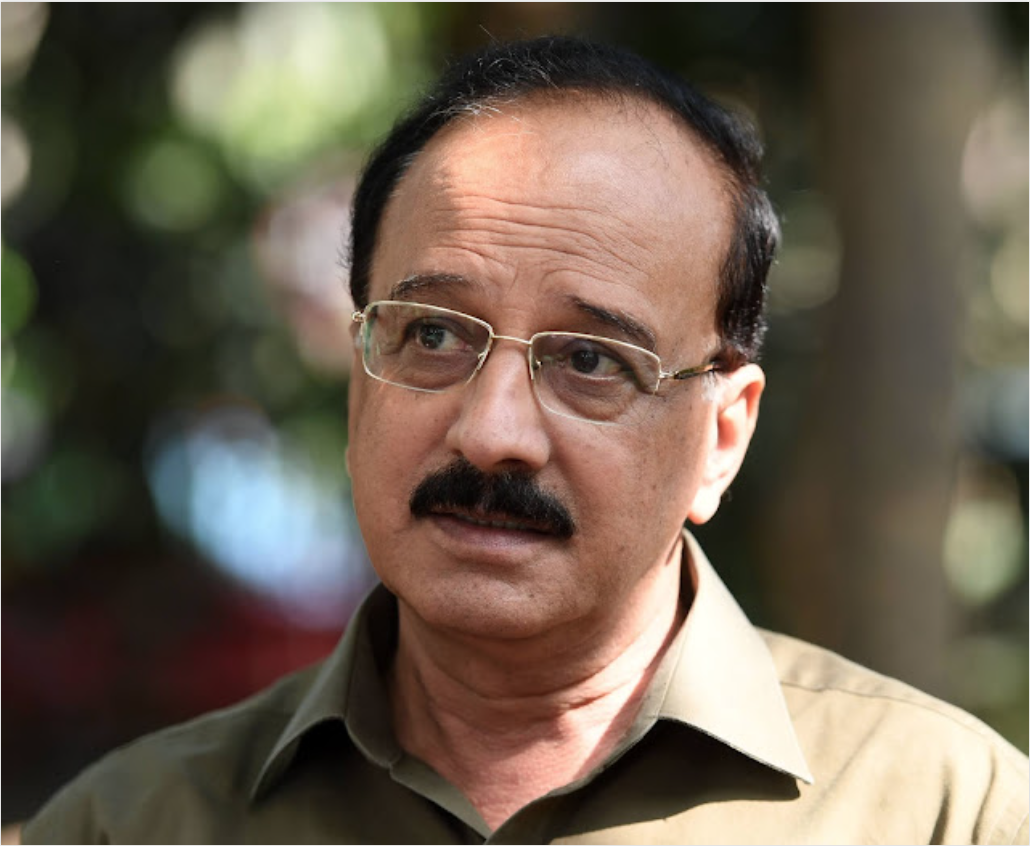
Devinder Sharma is an award-winning journalist, writer, thinker, and researcher known for his views on food and trade policy. Trained as an agricultural scientist (he holds a Master’s in Plant Breeding & Genetics), Sharma wrote for the Indian Express, and then quit active journalism to research on policy issues concerning sustainable agriculture, biodiversity and intellectual property rights, environment and development, food security and poverty, biotechnology and hunger, and the implications of the free trade paradigm for developing countries. He has been awarded with the honorary degree of Professor at Large by the CSK Himachal Pradesh Agricultural University, Palampur (India), and also has been a Visiting Fellow to the International Rice Research Institute, in the Philippines; Visiting Fellow at the School of Development Studies at the University of East Anglia, Norwich (UK); and a Visiting Fellow at the University of Cambridge (UK). Sharma is associated with numerous national and international organizations, civil society groups and farmers organisations. He also on the board of half a dozen national and international organizations, and is also a member of the CGIAR’s Central Advisory Service on Intellectual Property Rights.




