


“The financial elites have flourished in recent decades to a great extent because they have had government on their side, with the politicians working diligently to ensure that rules, regulations and tax policies established an environment in which the elites could thrive. For ordinary Americans, it has been a different story, with jobs shipped overseas by the millions and wages remaining stagnant, with labor unions under constant assault and labor standards weakened, with the safety net shredded and the message sent out to workers everywhere: You’re on your own.”
–
For those who are upset about the Republican victories two months ago, it would be good to reflect on these words of Bob Herbert. The truth is that whether it was Reagan, Bush, Bush 2, Clinton or Obama in the White House, whether Republicans or Democrats controlled the Senate or the House, things have gotten worse for most people in the United States over the last 30 years.
When Reagan came into office, the average corporate CEO made 42 times as much as the average worker. Today it’s more like 350 times as much. This is obscene.
For climate activists, we should not forget what happened, or what didn’t happen, with Obama in the White House and Democrats with huge majorities in the House and Senate. There was a complete failure of efforts to put a price on carbon, to enact policies that would drive the urgently needed shift away from dependence on coal and oil to the prioritizing of renewables, energy conservation and efficiency.
This year the big focus will be on the Environmental Protection Agency. Republican and some Democratic members of Congress will be doing all that they can to defang the EPA, to prevent it from moving forward with the regulation of stationary sources of carbon emissions and other pollutants. Environmental and climate groups have been working for months and will continue to do so to support and push the EPA to do its job, and to support and push Obama to cover the EPA’s back.
I wish I had confidence that Obama was prepared to do that. My belief is that he is going to need direct, constant and steady pressure to resist the fossil fuel interests and their enablers in Congress. Perhaps the fact that he will have to be gearing up for his 2012 Presidential re-election campaign, spending more time out of Washington interacting with the people, will strengthen his resolve on this and many other issues, particularly if climate and progressive activists in the places where he comes get organized to let him know what we think and feel.
It would be good if he did what he should have done after his election in 2008–use his Presidential “bully pulpit” to mobilize the grassroots behind a genuine change agenda. But this is wishful thinking. It’s wishful thinking because Obama has demonstrated over and over again that, despite his 2008 campaign rhetoric, the “change” he had in mind had nothing to do with a change as far as who is really in power, running the show, benefiting from government policies.
Bob Herbert has it right.
For the last two years progressive activists have mainly put their energies into trying to get the Democrats to use their control of the federal government to enact progressive policies. For many of us, we’ve been turned off by most of the results, a mixed bag at best. Often, the legislation was weak and seriously compromised by corporate interests. The financial elite who came close to plunging us into a full-scale depression are back on top with their big bonuses and huge fortunes. There’s been absolutely no accountability, not even a serious investigation into what they did. With the exception of Bernie Madoff and perhaps a few other lesser fish, none of them have been prosecuted.
It’s like the torture that went on during the Bush/Cheney war years. No accountability, no prosecutions, let’s all just forget about it and move on. And the wars continue.
In 2011 we’re going to have to stand up and go toe-to-toe as necessary with the revitalized climate crisis deniers, the straight-up corporate enablers, the scapegoaters of immigrants, teachers and public employees, those who want to privatize and weaken Medicare and Social Security.
As importantly, we have to get back to basics. Lots of us are doing grassroots organizing already; we need to keep that going, strengthen and expand it. We need to keep building the networks across issue lines that will make possible the emergence, hopefully this year, of a “united progressives” movement and alliance. We need a popular, issue-oriented third force that makes possible the political and social changes needed by so many of our peoples and by our threatened ecosystem. We need mass movements that are visible, that are out in the streets, that are engaging in civil disobedience to drive home the urgency of our demands, that shake up the system and give hope to those in need and those who understand the depth and interrelationship of our many crises.
We’ve learned–some of us have been reminded once again–that, in the words of Frederick Douglas in 1857, “power concedes nothing without a demand. It never did, and it never will. Find out just what people will submit to, and you have found out the exact amount of injustice and wrong which will be imposed upon them; and these will continue until they are resisted with either words or blows, or with both. The limits of tyrants are prescribed by the endurance of those whom they oppress.”
Ted Glick has been a climate activist since 2003 and a progressive activist since 1968. Past writings and more information can be found at http://www.tedglick.com.

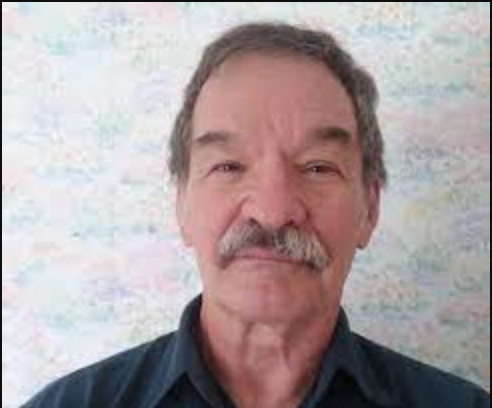
Ted Glick has devoted his life to the progressive social change movement. After a year of student activism as a sophomore at Grinnell College in Iowa, he left college in 1969 to work full time against the Vietnam War. As a Selective Service draft resister, he spent 11 months in prison. In 1973, he co-founded the National Committee to Impeach Nixon and worked as a national coordinator on grassroots street actions around the country, keeping the heat on Nixon until his August 1974 resignation. Since late 2003, Ted has played a national leadership role in the effort to stabilize our climate and for a renewable energy revolution. He was a co-founder in 2004 of the Climate Crisis Coalition and in 2005 coordinated the USA Join the World effort leading up to December actions during the United Nations Climate Change conference in Montreal. In May 2006, he began working with the Chesapeake Climate Action Network and was CCAN National Campaign Coordinator until his retirement in October 2015. He is a co-founder (2014) and one of the leaders of the group Beyond Extreme Energy. He is President of the group 350NJ/Rockland, on the steering committee of the DivestNJ Coalition and on the leadership group of the Climate Reality Check network.




