


It began with a statement by Nancy Pelosi in early January, referring to federal legislation to cap and reduce dangerous greenhouse gas emissions: "I’m not sure this year, because I don’t know if we’ll be ready. We won’t go before we’re ready."
Then, in late January, I heard Charles Rangel, head of the House Ways and Means Committee, speak publicly about his committee not holding hearings on climate legislation until "the end of the year."
Two weeks ago, Senator Barbara Boxer, head of the Senate Environment and Public Works Committee, in announcing a set of "principles" she will use in formulating climate legislation, was noncommittal about when she expected a vote in her committee. On the same day, climate blogger and well-connected Democrat Joe Romm, wrote approvingly of the idea (the plan?) that there should be no attempt to pass climate legislation through Congress until sometime in 2010.
And to put an exclamation mark on all of this, last week I heard representatives of the House Select Committee on Energy Independence and Global Warming and of Boxer’s Senate committee both say the same thing on a panel at the Good Jobs, Green Jobs conference. They made it clear that their bosses do not expect and, right now, are not intending to push to pass federal climate legislation out of Congress before President Obama goes to the enormously important United Nations Climate Conference in Copenhagen, Denmark in mid-December.
In other words, there is much evidence to indicate that, right now, the Democratic Party Congressional leadership, and perhaps the White House, has decided to "go wobbly" on the critical and urgent issue of climate change. Or, being charitable, perhaps they’ve been distracted by the battle over the economic stimulus package and now that that fight is over, they may soon come to realize the necessity of moving expeditiously in both houses of Congress to put a steadily declining cap and a rising price on carbon emissions.
There is no question but that there are practical difficulties in getting the needed 60 votes to get such legislation through the U.S. Senate, and it’s not just because of the fossil (fuel) mentality of the vast majority of Republican Senators. It’s also because of the unreliability of the 15 or so Democratic Senators, most of them from states where coal or oil extraction are major industries, who are by no means prepared to vote the right way on this issue. There are also problems in the House with similarly problematic House members.
This is why it is soooooooo good that Power Shift 09 (http://www.powershift09.org) and the Capitol Climate Action (http://www.capitolclimateaction.org) are taking place over the weekend of Feb. 27 to March 2 in Washington, D.C. These two separate actions will be bringing massive political pressure on Congress and President Obama at just the right time. They will be setting the tone for what needs to keep building and building all throughout this year, not letting up until we reach the essential goal of strong, science-based, climate legislation that Obama can sign and take with him to Copenhagen. When we have achieved this victory, our President will be in a powerful position to help lead the nations of the world at Copenhagen in the final negotiation of a much more rigorous international treaty to reduce carbon emissions.
Our goals can be nothing less. The urgency is too great. The truth is that we are in real danger of losing the race to avoid catastrophic climate change. Eight years of Bush/Cheney obstruction of national and international efforts to address this crisis have put us in a very rough situation. We should have enacted federal legislation on this issue 10 years ago. We can’t, we absolutely cannot, allow the Washington politico crowd to throw us off track.
We need to be clear: although the situation in Washington is much better, as indicated by the roughly $80 billion for renewable energy, energy efficiency, green jobs and mass transportation in the stimulus package, it’s still "Washington." The coal and oil lobbies are powerful, and they have been escalating their efforts, spending hundred of millions of dollars during the 2008 Presidential election cycle.
And among far too many environmental groups there is an insufficient appreciation of the importance of massive and visible demonstrative action-"street heat"-in bringing around elected officials whose backbone needs to be stiffened or whose collaboration with the fossil fools needs to be exposed. This is true even though there are recent examples of the political importance of "street heat" within the climate movement itself.
On April 14th, 2007, there were 1400 local actions in every state in the country as part of the Step It Up campaign led by Bill McKibben and a group of student climate activists from Middlebury College. Approximately 150,000 people took part. Prior to this campaign the strongest piece of climate legislation in Congress was a very weak McCain-Lieberman bill in the U.S. Senate. But as a result of April 14th, the political dynamics following it, focused pressure on Congress by climate and enviro groups and, then, the first Power Shift conference in November of 2007, things changed. The idea of reducing carbon emissions 80% by 2050-a radical idea before Step It Up emerged-went mainstream. By 2008, 155 House members had signed on to a Safe Climate Act mandating this level of reductions, and all of the Democratic Presidential candidates during the primary season talked of this as what was needed.
Its been true down through history. You do not get fundamental change-and strong, science-based, federal legislation mandating a shift away from fossil fuels would represent a fundamental shift in energy policy-without mass movements pushing the decision-makers from the outside, refusing to take no for an answer. You need all kinds of tactics, from letters to the editor to strategic Congressional lobbying to mass demonstrations and civil disobedience.
Upwards of 10,000 students and non-students will be gathering at the D.C. Convention Center in two weeks. On Monday morning, March 2, thousands of them will be flooding Capitol Hill to demand that their representatives do the right thing for the climate, for justice, for all of the life forms which make this earth the wondrous and beautiful place that it is. Then, that afternoon, thousands of people, upwards of 2,000 of them prepared to risk arrest, will be gathering on Capitol Hill to march to the coal-fired Capitol Power Plant a few blocks away to make a strong statement with their bodies that it is long past time to power past coal and get serious about the rapid shift to renewables, conservation and efficiency.
Let the clean energy revolution begin.
Ted Glick is the Policy Director of the Chesapeake Climate Action Network (http://www.chesapeakeclimate.org) and a long-time progressive activist. More information and contact information can be found at http://www.tedglick.com.

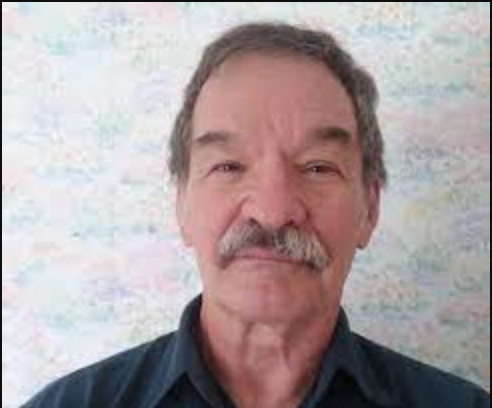
Ted Glick has devoted his life to the progressive social change movement. After a year of student activism as a sophomore at Grinnell College in Iowa, he left college in 1969 to work full time against the Vietnam War. As a Selective Service draft resister, he spent 11 months in prison. In 1973, he co-founded the National Committee to Impeach Nixon and worked as a national coordinator on grassroots street actions around the country, keeping the heat on Nixon until his August 1974 resignation. Since late 2003, Ted has played a national leadership role in the effort to stabilize our climate and for a renewable energy revolution. He was a co-founder in 2004 of the Climate Crisis Coalition and in 2005 coordinated the USA Join the World effort leading up to December actions during the United Nations Climate Change conference in Montreal. In May 2006, he began working with the Chesapeake Climate Action Network and was CCAN National Campaign Coordinator until his retirement in October 2015. He is a co-founder (2014) and one of the leaders of the group Beyond Extreme Energy. He is President of the group 350NJ/Rockland, on the steering committee of the DivestNJ Coalition and on the leadership group of the Climate Reality Check network.




