


As world leaders return from Copenhagen without an agreement that will protect the earth’s atmosphere from devastating climate change, we ordinary people are forced to confront not only what we think, but also what we feel.
When I was in elementary school in the early 1950s we had air raid drills. Sirens would sound and we would be instructed to "duck and cover" under our desks. There were plenty of jokes among the kids about our instructions. "In the event of nuclear attack bend over, put your head between your legs, and kiss your ass goodbye."
Such a blasé attitude concealed the fact that I and my friends, like many of our contemporaries, took it for granted that we were likely to die in a nuclear war. I certainly never expected to live beyond twenty or at most thirty if the pattern of escalating nuclear overkill continued unabated.
A recent late-night TV show joke expressed a similarly blasé attitude about the threat of global warming:
"According to a new U.N. report, the global warming outlook is much worse than originally predicted. Which is pretty bad when they originally predicted it would destroy the planet."
Following the first explosion of an atom bomb, Albert Einstein warned, "The unleashed power of the atom has changed everything save our modes of thinking and we thus drift toward unparalleled catastrophe." Global warming and other environmental threats intensified fears for human survival. In 1977, political scientist Charles Lindblom wrote, "Relentlessly accumulating evidence suggests that human life on the planet is headed for a catastrophe. Indeed, several disasters are possible, and if we avert one, we will be caught by another." He enumerates population growth, resource shortage, and global warming. "All this assumes that a nuclear catastrophe does not spare us the long anguish of degeneration."
In 1992, the physiologist and author Jared Diamond wrote, "Until our own generation, no one had grounds to worry whether the next human generation would survive or enjoy a planet worth living on. Ours is the first generation to be confronted with these questions about its children’s future." Two "clouds" hanging over us raise these concerns: "nuclear holocaust" and "environmental holocaust." These risks "constitute the two really pressing questions facing the human race today."
Sixty years after Einstein’s warning, the astrophysicist Stephen Hawking said, "Life on Earth is at the ever-increasing risk of being wiped out by a disaster," such as "sudden global warming" or "nuclear war." Despite more than half-a-century’s awareness of the possibility of man-made doom, the drift Einstein warned of continues unabated. So has passivity and paralysis in its face.
Despair seems a natural, indeed, even an appropriate response to such a reality. It is genuinely difficult to know how else to relate to threats to the existence of our species that we appear powerless to halt.
Before we can think seriously about what to do about the threats of doom, therefore, we have to think about our own responses. Is despair warranted, and if so is it the only appropriate response? Is it already too late to do anything? If a situation is hopeless, isn’t psychological denial appropriate – if we can’t do anything about it, shouldn’t we just ignore it and get on with the rest of life as best we can? Is the threat of doom likely to spur us to action? Or is it more likely to make us feel helpless and turn us to apathy? Can despair be a bridge to something else?
We have good scientific reasons to expect that, without any help from us, the human race will sooner or later become extinct and that eventually our planet will freeze or burn up or shatter into bits. And we have good reason to think that nothing we can do will avert such a fate.
But self-inflicted, man-made doom is different. It cannot be regarded as something human beings are inherently powerless to avert. What we appropriately experience is that we are powerless to avert it as individuals. But collectively we could reverse the drift toward doom in a day – if we agreed to do so — simply by halting those activities that are generating it. The powerlessness we experience is not the result of our destructive capacity, but of our apparent inability to organize ourselves to prevent ourselves from using it to destroy ourselves.
These social roots of doom are part of a common pattern that we can observe repeatedly in history. People live their lives and pursue their goals by means of strategies that have been developed over time. But sometimes they discover their established strategies aren’t working. No matter how hard they try, their problems remain intractable. The natural result is despair.
If many people are living the same experience, an entire social group may be permeated with despair. They can express that despair to each other in many ways – for example, in mordant jokes about doom.
But the awareness that other people are experiencing the same despair changes the context in which it is experienced. It opens up new possibilities. Perhaps the problems that we despair of solving as individuals can be addressed through some kind of collective action. When people begin to explore that possibility, the result may be a social movement.
In short, the sense of despair in the face of individual powerlessness can be the soil from which new social movements and new forms of collective action emerge. Gloom is often part of the process by which new social solutions arise. It is a manifestation of the recognition that our current patterns can’t solve our problems. So our sense of powerlessness in the face of today’s impending doom can lead not only to despair, but also to a sharing of despair, which can open the way for us to try new social strategies and new forms of action in common.
Something like this happened during the early years of the nuclear arms race. Awareness of the futility of current strategies like security through nuclear superiority and civil defense was initially expressed in the hopelessness of "kiss your ass goodbye." But from that awareness emerged the "ban the bomb" movement for nuclear disarmament and against nuclear testing. As recent historical research has established, that movement both influenced and intimidated world leaders. It played a significant role in bringing about a nuclear test ban treaty, U.S.-Soviet détente, and arms control agreements that reduced the likelihood of nuclear holocaust for a generation.
What has come to be known as the "Alcoholic’s prayer" appeals for "the serenity to accept the things we cannot change, courage to change the things we can, and wisdom to know the difference." If the question is whether any of us as individuals can halt global warming or remove the threat of nuclear warfare, the answer is surely no.
But what we can or cannot do individually is not the measure of what we can do together. If the question, conversely, is whether all of us acting together could reverse the drift to doom, the answer is just as clearly yes. But that doesn’t mean it will just happen. It depends on what people determine to do.
While people utilize their established strategies, they also change them. And so how they will respond to new situations is never fully predictable. The most terrible events may be taken as a cause for despair or as a spur to change. The close encounter with nuclear holocaust in the Cuban missile crisis unexpectedly led both the U.S. and the U.S.S.R. to back off from the mad pursuit of nuclear superiority and move toward a strategy of détente and arms control. There is no guarantee that the Katrinas of the future will have a similar effect – but there is no guarantee that they won’t.
The condition for human survival is a new strategy based on the cooperation of all to ensure the survival of all. I use the phrase "common preservation" to denote strategies in which people try to solve their problems by meeting their common needs rather than exclusively their own. Common preservation is now the necessary condition for self preservation. None of us can count on survival, let alone well-being, for ourselves and those we care about, unless we take coordinated action to transform the current patterns of human life. Self-preservation for individuals and groups can now only be ensured through common preservation of our species and its environment as a whole.
Doom sends out its harbingers. It was the discovery of fallout from nuclear testing that made the threat of the nuclear arms race real to millions of people who had previously experienced nuclear Armageddon as only a remote and hypothetical threat. Hurricanes, heat waves, and floods provide an almost Biblical harbinger of the approaching catastrophe of climate change.
Is it already too late? We know that much is already lost. But there is no way to know if all is lost. There is no way to know for certain in advance what a collective response may yet achieve. We are in the position of parents who, having already lost a child, now must decide whether to fight for our other children who are threatened but still alive.
If the earth could cry out like a threatened child, it might cry in the dying words of the labor poet Joe Hill, "Don’t mourn for me – organize."
But the truth is, we have to mourn. We have to mourn for the victims of Katrina, and for the way of life that it destroyed. We have to mourn for the many other Katrinas that have already occurred in Bangladesh and Indonesia, and that are already fated to occur, whatever we may do. We have to mourn for the polar bears whose habitat has been destroyed. We have to mourn for each cherished piece of our own environment: a certain kind of winter day or the songbirds who no longer visit an altered clime. We have to mourn for what we will lose – what we must sacrifice – to do what is necessary to ward off doom. Our grief is the only way to keep faith with that which — and those who — have already been sacrificed to our folly.
And yet, if all we do is mourn, are we not colluding in the condemnation of additional peoples, cities, and habitats to destruction?
Let us say rather, paraphrasing Mother Jones, "Mourn for the dead; fight like hell for the living."
Or, in the words of the African American spiritual that became an anthem of the civil rights movement:
"We are soldiers in the army
We’ve got to fight, although we’ve got to cry.
We’ve got to hold up that bloodstained banner;
We’ve got to hold it up till we die."
Jeremy Brecher is a historian, the author of more than a dozen books on labor and social movements, and a staff member of the Labor Network for Sustainability www.labor4sustainability.org His next book is Common Preservation in an Era of Mutual Destruction. This piece is dedicated to Tim Costello, writing partner of forty years, who died this month. For Tim’s memorial webpage, visit www.laborstrategies.blogs.com

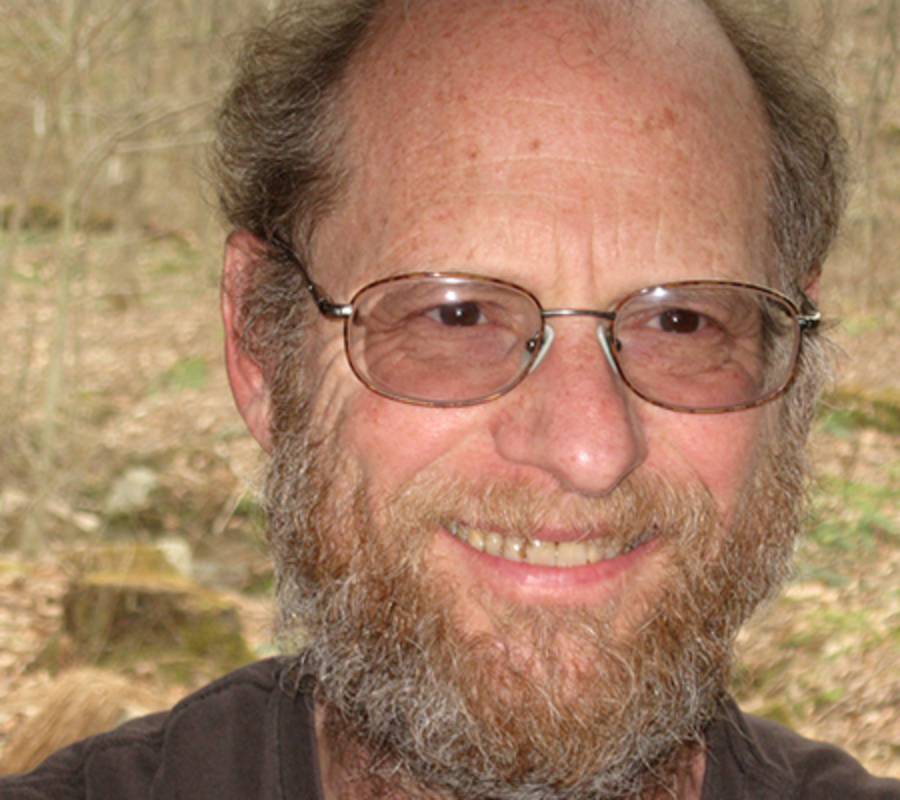
Jeremy Brecher is a historian, author, and co-founder of the Labor Network for Sustainability. He has been active in peace, labor, environmental, and other social movements for more than half a century. Brecher is the author of more than a dozen books on labor and social movements, including Strike! and Global Village or Global Pillage and the winner of five regional Emmy awards for his documentary movie work.




