


Like most people, American journalists are apt to look at the very rich with awe. Names like Bill Gates, George Soros and Warren Buffett have the ring of modern-day royalty — high above the rest of us, and maybe even vaguely immortal.
The inclination to see wealth as a gauge of human worth goes back a long way. “They measure everything by the gold standard, men as well as mules,” Joshua Speed observed during a visit to California in 1876. “You never hear of Mr. Smith as a good man, or Mr. Brown as an honest man, or Mr. Jones as a Christian, but Mr. S has twenty thousand million and so on. The more he has, the better he is — and it matters not how he got it, so he has it.”
Speed, who was a close friend of Abraham Lincoln, might not be any more upbeat in 2002. These days, in a society eager to condemn the Enron debacle, we might want to conclude that decent standards ultimately prevail. But media censure comes down hard on financial mismanagement, flagrant skullduggery and collapse — not on zeal to keep maximizing profits and riches.
Unless they appear to be headed for prison, frontrunners in money-mania derbies are good bets to remain media heroes. For years, Enron’s hard-driving leader Ken Lay was awesome. His acquisitions dazzled many reporters and media consumers.
Mere insatiable greed — always pushing for more, more, more — is unlikely to cause bad press. In fact, journalists often cite enthusiasm for boosting “net worth” as evidence of exemplary character. As long as they don’t get busted for breaking major laws, the extremely rich are epitomes of media success stories.
Coronated as virtual geniuses at a frenzied pace during the dot-com boom, quite a few investors and executives were quickly “worth” hundreds of millions or even more. With mucho dollars attesting to their greatness, brilliant tacticians of the business world were profiled in countless splashy news reports.
Such profuse adulation of the rich exists side-by-side with occasional media trashing of individuals as overly piggish or personally flawed. A Newsweek cover story, headlined “Rhymes With Rich,” raised eyebrows in August 1989 for its harsh treatment of hotel mogul Leona Helmsley. But — far from faulting her for being a billionaire in a country with millions of destitute people — the article took Helmsley to task for instances of personal unkindness. Her outsized class privileges went unchallenged.
The current Enron scandal has already touched on many important issues. But if the firm had kept scrupulous accounts instead of cooking the books, it might still be considered a model corporate citizen. After all, while Enron was riding high on Wall Street, national media coverage was generally favorable as the company gorged itself on electricity privatization — heralded as “reform” and boosted by political influence-leasing from California to India.
In 1993, Enron wrangled an agreement with India’s state government of Maharashtra for a 695-megawatt plant. “The Enron project was the first private power project in India,” Arundhati Roy wrote in her book “Power Politics,” published last year. Lots of cash lubricated the fix.
“Enron had made no secret of the fact that, in order to secure the deal, it had paid out millions of dollars to ‘educate’ the politicians and bureaucrats involved in the deal,” Roy recalled. For India, the size of the scheme was unprecedented: “Experts who have studied the project have called it the most massive fraud in the country’s history.” The project’s gross profits were set to exceed $12 billion.
Not that such massive gouging bothered U.S. media. On the contrary. For the journalistic mainstream, privatization — whether in Western India or Northern California — was beneficent. Ken Lay and the rest of Enron’s smart guys were ahead of the curve. Visionary hotshots.
Reverence for the super-rich pervaded America’s “newspaper of record” during the recent World Economic Forum events in Manhattan. Several dozen New York Times articles breathlessly described chic interactions among top investors, business executives and government officials. Much was made of their notable willingness to acknowledge that the world they endeavor to run has not been going too well. Moving toward more enlightened self-interest, they recognized that global social problems merit deep concern!
Meanwhile, the Times reported in a number of stories, thousands of protesters were in the streets, demanding economic justice and stuff like that. Those articles included snippets of quotes. And the Times liberally published photos of creative-looking puppets and posters carried by demonstrators.
Naturally, people who have fundamental problems with corporate agendas shouldn’t expect much in-depth or sympathetic news coverage in U.S. mass media. So, major outlets told us little about upwards of 50,000 activists from around the planet who converged on Porto Alegre, Brazil, for the second annual World Social Forum. While the bash for global elites in New York received extensive ink, the meeting in Porto Alegre got short shrift. That’s called a free press.
Postscript: In contrast to a year ago, when the New York Times was able to muster a grand total of one paragraph to cover the World Social Forum, this time around the paper actually printed three news articles about the gathering. But quantitative measures of coverage can obscure the matter of quality.
In this case, the Times accounts of the event appeared with ascending levels of disparagement. By the time that the paper got to its Feb. 7 wrap-up story, the world’s second historic grassroots summit in Brazil was “more than anything a campaign stop for the country’s coming presidential election.” And in the end, the Times reported, “little of substance was accomplished.”
As for the Washington Post, which published a substantive news story about the World Social Forum a year ago, its journalistic eyes were on Manhattan. The Post made only a couple of passing references to the 2002 World Social Forum — a brief wire-service dispatch and a single sniping sentence under a New York dateline, reporting that in Porto Alegre a “world conference on progressive alternatives to global capitalism has drawn 14,000 delegates and thousands of hangers-on.”

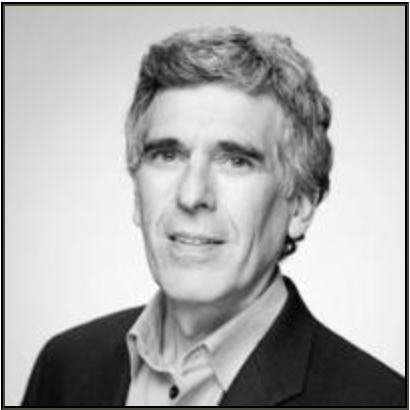
Norman Solomon is the national director of RootsAction.org and executive director of the Institute for Public Accuracy. The paperback edition of his latest book, War Made Invisible: How America Hides the Human Toll of Its Military Machine, includes an afterword about the Gaza war.




