


In mid-September, India Abroad splashed its front page with this headline: “I would love to have Indian troops in Iraq, Bush tells India Abroad.” The context for veteran political affairs correspondent Aziz Haniffa’s story is a fund-raiser that raised $1.5 million toward the re-election campaign of George W. Bush. Apart from the well-heeled Floridian elite who opened their checkbooks, the room held over sixty Indian American Republicans who are both totally out of touch with their community and who are eager to sign checks to a President who does not need their money (he already has a record war chest). The organizer of the event, Dr. Zach Zachariah is a Ranger, one of the top twenty fund-raisers for Bush. After the event, Dr. Zachariah took his close friends on a luxury yacht cruelly called The King of Hearts.
In the context of this event awash with dollars, Bush told Haniffa, “I would love to have Indian troops [in Iraq] but he [Vajpayee] has a problem with it. He has an election coming up and I understand his problem.”
Yes, Bush understands his problem: he too has an election coming up next year and his numbers, astronomical after 9/11, are now terrestrial, almost within range of the Democratic field. One of Bush’s problems is that the war on Iraq has led to an Occupation of Iraq, and in that colonial situation more American troops are dying than they did as they bombed Saddam’s army to ashes. As each American solider dies, another American family decides not to vote for Bush in 2004, and their community also begins to doubt the sanity of world domination as preached by Vice President Dick Cheney and his no. 2, Paul Wolfowitz.
To replace the body bags of American troops, President Bush has offered a cash reward to any country around the world if it is willing to send its troops and let them go back to their villages in body bags. In return, the impoverished states that send these troops will earn the special favor of the US administration, contracts for the rebuilding of Iraq, and of course, favorable terms to the concession of oil once that comes back in line.
My friend P. Sainath put it eloquently in his June 29, 2003 column for The Hindu, “By sending our troops, we get to earn a quick buck on the side. So Indian companies will gain what lusting newspapers call ‘lucrative contracts.’ And we can sacrifice a few hundred jawans [soldiers], maybe many more, so that our CEOs can do even better in the next Forbes and Fortune lists. Never mind that these lucrative contracts could place us morally in the ranks of contract killers. No wonder the Americans are seeking our help. They are body shopping in a literal sense. This is one outsourcing of jobs their unions won’t protest. The job of dying for US imperialism.”
The Vajpayee-led National Democratic Alliance did not refuse to send the jawans to Iraq because of either the state elections or the national elections – the troops did not go because of the combined opposition in the country from the Congress, the Samajwadi Party, the Communist Parties, and most of the opposition. Even sections of the BJP and the Shiv Sena, not to speak of the opportunistic regional parties within the NDA, did not want the troops to die for US imperialism.
Indians are fed-up with being the sepoys for one kind of imperialism or another. Sepoys (the anglicization of sipahi or soldier) had helped the almost defeated British in 1857 to retake control of the subcontinent – from Punjab and from Nepal came the two main reinforcements to the East India Company.
In 1862 a senior British official noted, “I wish to have a different and rival spirit in different regiments, so that Sikh might fire into Hindoo, Goorkha into either, without any scruple in case of need.” In this spirit of divide and conquer, the British sent the sepoys across Africa and Asia to put down rebellions for the Empire. From Burma in 1885 to Iraq in 1915, the sepoy became an integral part of imperial rule.
So, if the troops do go to Iraq, this will not be their first outing. In 1915-16, several thousand sepoys went to Iraq to fight for the British against the moribund Ottoman Empire. One British historian called this invasion “a capital sin,” and the war that they fought “perhaps the most remarkable example of an enormous military risk being taken, after full deliberation, for no definite or concrete military purpose.” Thousands of sepoys died in Iraq.
Since the US does not operate a draft and relies upon volunteers to staff its military force, the bulk of those who are in combat come from among the lower middle and working class. Rick Jahnkow of Committee Opposed to Militarism and the Draft calls the recruitment of the US military, the “poverty draft.” Furthermore, the military is one of the few institutions where Blacks and Latinos are not in a minority: they are being killed in Iraq in numbers far greater than their proportion in the population. Indeed, the first US casualty was not even a citizen, but a Guatemalan man, Jose Gutierrez.
There are now more Black men in jail than in college, and they comprise a large part of the two million Americans who form the largest incarcerated population on the planet. These people are known by their skin-color, but when Blacks and Latinos join the military, their skin turns green, the color of the US fatigues. When they die in combat, they are American, and it is this American blood that disturbs the US public, even as they are generally immune to the police excesses against Blacks and Latinos within the country.
The Washington Post reported, stunningly, that until mid-2003, almost seventy percent of the US population believed that Saddam Hussein’s regime in Iraq had something to do with the attacks of 9/11. If the British government “sexed up” the reports of weapons of mass destruction, on the Iraq-9/11 link there is no basic evidence to embellish. 9/11 being the sacred day, it has been invoked by the Bush administration to sell its entire bag of tricks, most of which had been resoundingly rebuked for a year and a half before the terrorist attacks.
To summon 9/11 is to appeal to an American distaste for the loss of American life. Those several thousand dead have a greater claim to the global imagination than a comparable number of dead in, say, Bhopal. Shortly after Union Carbide’s reckless terrorism killed twenty thousand people in 1984, a representative of American Cyanamid quite casually noted that the number should not be taken too seriously because Indians do not share “the North American philosophy of the importance of human life.” The innocent lives of un-Americans and non-Americans can be sacrificed to preserve every last drop of American blood.
When the US asks India to send troops, it is not for the multilateral reconstruction of Iraq. The motivation behind the request is to make the jawans sacrifice their lives for the dollar, and to ensure the re-election of G. W. Bush. Perhaps this is why President Bush raised the question at a fund-raiser for his re-election, and this is why he transferred his own fears of 2004 onto Vajpayee.

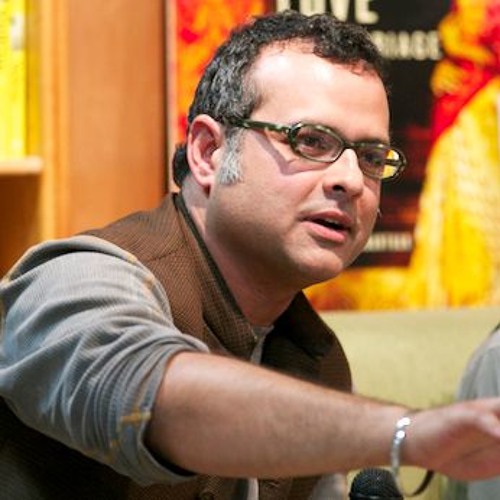
Vijay Prashad is an Indian historian, editor, and journalist. He is a writing fellow and chief correspondent at Globetrotter. He is an editor of LeftWord Books and the director of Tricontinental: Institute for Social Research. He is a senior non-resident fellow at Chongyang Institute for Financial Studies, Renmin University of China. He has written more than 20 books, including The Darker Nations and The Poorer Nations. His latest books are Struggle Makes Us Human: Learning from Movements for Socialism and (with Noam Chomsky) The Withdrawal: Iraq, Libya, Afghanistan, and the Fragility of U.S. Power. Tings Chak is the art director and a researcher at Tricontinental: Institute for Social Research and lead author of the study “Serve the People: The Eradication of Extreme Poverty in China.” She is also a member of Dongsheng, an international collective of researchers interested in Chinese politics and society.




